Wednesday, 1 June 2011

CASE 298 - DynCorp


DynCorp International is a United States-based private military company (PMC) and aircraft maintenance company. DynCorp receives more than 96% of its $2 billion in annual revenues from the US federal government.
The corporate headquarters are in Falls Church, Virginia. However, substantially all of the company's contracts are managed out of its office at Alliance Airport in Fort Worth, Texas.
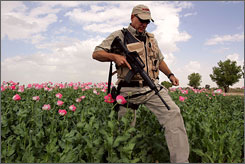
The company has provided services for the U.S. military in several theaters, including Bolivia, Bosnia, Somalia, Angola, Haiti, Colombia, Kosovo and Kuwait. DynCorp International also provided much of the security for Afghan interim president Hamid Karzai's presidential guard and trains much of Afghanistan's and Iraq's fledgling police force. DynCorp was also hired to assist recovery in Louisiana and neighboring areas after Hurricane Katrina. DynCorp and the Department of State have been criticized for not properly accounting for $1.2 billion in contract task orders authorized by the State Department to be used to train Iraqi police. DynCorp has held one contract on every round of competition since receiving the first Contract Field Teams contract in 1951. DynCorp won the LOGCAP II contract and is one of three contract holders on the current LOGCAP IV contract.


DynCorp traces its origins from two companies formed in 1946: California Eastern Airways (an air freight business) and Land-Air Inc. (an aircraft maintenance company).
Two years after being organized, California Eastern Airways — despite emerging as the second largest independent air carrier—- filed for bankruptcy in May 1948. Meanwhile, Land-Air, Inc. reached a major milestone in 1951, when it was awarded the first Contract Field Teams (CFT) contract by the Air Force Logistics Command (AFLC). (DynCorp International and its predecessors have provided services under the CFT program continuously since being awarded that first contract, having been awarded one CFT contract in every round of recompetition including the most recent round which began in October 2008.)
Land-Air purchased the remnants of California Eastern Airways and assumed the purchased company's new name. Thereafter the company went through a series of name changes (first to California Eastern Aviation, Inc., then in 1962 to Dynalectron Corporation) before settling on DynCorp in 1987. During this time DynCorp became an employee owned company.
In December 2000, DynCorp formed DynCorp International LLC, and transferred to it all of its international business to this entity while DynCorp Technical Services LLC continued to perform DynCorp’s domestic contracts.
In March 2003, DynCorp and its subsidiaries were acquired by Computer Sciences Corporation (CSC) for approximately US$914 million.
Less than two years later, CSC announced the sale of three DynCorp units (DynCorp International, DynMarine and certain DynCorp Technical Services contracts) to Veritas Capital Fund, LP for US$850 million.
In 2006, DynCorp went public on the New York Stock Exchange under the symbol DCP.
On April 12, 2010 DynCorp announced a conditional deal to be acquired by private equity investment firm Cerberus Capital Management at a price of $17.55 per share ($1 Billion). The deal was agreed on 7 July 2010


Abuses in Iraq

The New York Times reported on February 1, 2007 that the Special Inspector General for Iraq Reconstruction found that DynCorp seemed to act almost independently of its reporting officers at the Department of State, billing the United States for millions of dollars of work that were not authorized and beginning other jobs without a go-ahead. According to the report, the findings of misconduct against DynCorp on a $188 million job to buy weapons for, and build quarters for, the Iraqi police were serious enough to warrant a fraud inquiry.
In February 2007 federal auditors cited DynCorp for wasting millions on projects, including building an unapproved, Olympic-sized swimming pool at the behest of Iraqi police officials.
On October 11, 2007, a DynCorp security guard in a US State Department convoy killed a taxi driver in Baghdad. According to several witnesses, the taxi did not pose a threat to the security of the convoy.
A US government audit report of October 2007 revealed that $1.3 billion was spent on a contract with DynCorp for training Iraqi police. The auditors stated that the program was mismanaged to such an extent that they were unable to determine how the money was spent.
A January 2010 report by the SIGIR assessed that oversight of DynCorp police training contracts by the Bureau of International Narcotics and Law Enforcement Affairs found that INL exhibited weak oversight of the DynCorp task orders for support of the Iraqi police training program. It found that INL lacks sufficient resources and controls to adequately manage the task orders with DynCorp. As a result, more than $2.5 billion in U.S. funds were vulnerable to waste and fraud.
In April 2011, DynCorp agreed to pay $7.7 million to the US government to settle claims that it had inflated claims for construction contracts in Iraq.
[edit]July 2010 Afghan incident

On July 30, 2010, four Afghan civilians were killed on a road near Kabul International Airport when their car was struck by a vehicle belonging to DynCorp. After the accident, the DynCorp employees were attacked by a crowd and their vehicle was set on fire. A second vehicle with DynCorp employees came to the site to assist, but was also attacked, and their vehicle was also set on fire.
Kabul police then arrived on scene and dispersed the crowd, after which they safely removed the DynCorp teams. DynCorp said it was investigating the accident which involved employees who were working under a program sponsored by the U.S. Department of State
CASE 297 - The pleiades


The Pleiades

The Pleiadians (supposedly) are from a star system called Pleiades. This star system is a small cluster of seven stars located in the Constellation
of Taurus the Bull. We call it the Seven Sisters.


The Pleiadians are a very ancient race of humanoids. They have kept a record of the complete history of Earth's human evolution
from the very beginning to our present time. Pleiadians claim our Earth is 626 billion years old.

Taurus is composed of two main groups of stars; the Pleiades and Hyades. The Pleiades are a star cluster with eta (η), Alcyone, as the principal star, situated on the shoulder of the Bull, also known as the Seven Sisters and Messier 45, or M45. Traditionally six of the stars are visible to the naked eye, another star is "lost" or "invisible" giving rise to stories and legends explaining the reason. In Japan they are called "Subaru". Their Persian name is "Soraya".


The Pleiades consist of nine named stars, some of them are small stars, the seven sisters; and to these have been added the parents, Atlas and Pleione:

Notice the subaru logo displaying The pleiades


Atlas - The father of the Hyades and Pleiades, who was condemned to support the weight of the heavens on his head and hands. Titan bearing up the Heavens. The Endurer. Believed by some mythologists to be the originator of the constellations. Others believe it was Chiron (Centaurus).

Plein - (Pleione, the mother), means `to sail', making Pleione `sailing queen' and her daughters `sailing ones.'

Alcyone - Seduced by Poseidon. The Central One. The Hen.

Asterope (Sterope) - Raped by Aries and gave birth to Oenomaus, king of Pisa.

Celæno - Seduced by Poseidon. Was said to be struck by lightning.

Electra - Seduced by Zeus and gave birth to Dardanus, founder of Troy.


Maia - Eldest and most beautiful of the sisters. Seduced by Zeus and gave birth to Hermes. Later became foster-mother to Arcas, son of Zeus and Callisto, during the period while Callisto was a bear, she and Arcas were placed in the heavens by Zeus (she as Ursa Major, Arcas Ursa Minor).

Merope - The missing one or Lost Pleiades. This is the seventh of the sisters. She alone, married a mortal man; Sisyphus, and she repents of it, she hid her face in shame at being the only one not married to a god and from shame at the deed, she alone of the sisters hides herself in the sky (there is some dispute over whether it is Merope or Electra that hides herself, i.e. the star does not shine). Her husband, Sisyphus, son of Æolus, grandson of Deucalion (the Greek Noah), and great-grandson of Prometheus. Sisyphus - Merope's husband - founded the city of Ephyre (Corinth) and later revealed Zeus's rape of Ægina to her father Asopus (a river), for which Zeus condemned him to roll a huge stone up a hill in Hades, only to have it roll back down each time the task was nearly done.

Taygete/a - This is the sister who consecrated to Artemis the Cerynitian Hind with the golden horns that Heracles (3rd labor) had to fetch. Seduced by Zeus and gave birth to Lacedæmon, founder of Sparta.

CASE 296 - life saver, survival and bushcraft


Bushcraft

Bushcraft is a long-term extension of survival skills. A popular term for wilderness skills in Australia, New Zealand and South Africa, the term was popularised in the southern hemisphere by Les Hiddins (The Bush Tucker Man) in Australia as well as in the northern hemisphere by Mors Kochanski and recently gained considerable currency in the United Kingdom due to the popularity of Ray Mears and his bushcraft and survival television programmes. Bushcraft is about surviving and thriving in the natural environment, and the acquisition of ancient skills and knowledge to do so. Bushcraft skills include; firecraft, tracking, hunting, fishing, shelter building, the use of tools such as knives and axes, foraging, hand-carving wood, container construction from natural materials, rope and twine-making, and many others. These are the kinds of skills well known to our ancient predecessors, many of which are still practiced today as an everyday skill amongst aboriginal and native peoples around the world.

Survival skills

Survival skills are techniques a person may use in a dangerous situation (e.g. natural disasters) to save themselves or others (see also bushcraft). Generally speaking, these techniques are meant to provide the basic necessities for human life: water, food, shelter, habitat, and the need to think straight, to signal for help, to navigate safely, to avoid unpleasant interactions with animals and plants and for first aid. Survival skills are often basic ideas and abilities that ancient humans had to use for thousands of years, so these skills are partially a reenactment of history. Many of these skills are the ways to enjoy extended periods of time in remote places, or a way to thrive in nature. Even hiking, backpacking, horseback riding, fishing, hunting, or some other activity, you need to make sure you have the basic wilderness survival skills to handle an emergency situation. Some people use these skills to better appreciate nature and for recreation, not just survival. I personally have learnt alot from many people but Ray Mears is the man, below is just a few of many he has to offer


P.L.A.N

Protection - Ensure you are not or will not be in harm
Location - Research and know you're location where to alert rescuers or settle
Acquisition - Look for water and supplies
Navigation - good navigation will keep you safe


Be Prepared

In situation of disasters, floods, economic breakdown or just for fun camping make sure you are and stay physically and mentally prepared for how ever long it may be


STOP

Stop
Think
Observe
Plan


Below are 20 items that would be very useful in a situation of disasters, floods, economic breakdown or just for fun camping and they are things that I have purchased myself

1) Lafesaver water bottle - £149.99


2) Mini 1st aid - £12.99


3) survival kit - Whistle, light, knife, compass, saw, matches and many others - £14.99


4) Hammock and tent - £75


5) swiss army knife - £22


6) X4 Foil blankets - X1 foil tent - £10


7) Organic seeds (lots of them)


8) cooking set - ?


9) Water proof bag - £25


10) Water proof trousers and coat - ?


11) Led headlight - £5


12) NBC gas mask - (Nuclear - Biological - Chemical) - £15


13) Maps - £5


14) Solar phone and battery charger - £25


15) Tin with lighter, flints, matches, rizler, card, gas - ?


16) Survival books - ?


17) Axe - ?


18) Small supply of cloths


19) 12 hour glow sticks - X10 = £10


20) Toiletries bag - ?

CASE 295 - DuPont


E. I. du Pont de Nemours and Company, commonly referred to as DuPont, is an American chemical company that was founded in July 1802 as a gunpowder mill by Eleuthère Irénée du Pont. DuPont was the world's third largest chemical company based on market capitalization and ninth based on revenue in 2009. Its stock price is a component of the Dow Jones Industrial Average.
In the 20th century, DuPont developed many polymers such as Vespel, neoprene, nylon, Corian, Teflon, Mylar, Kevlar, Zemdrain, M5 fiber, Nomex, Tyvek, Sorona and Lycra. DuPont developed Freon (chlorofluorocarbons) for the refrigerant industry and later, more environmentally friendly refrigerants. It developed synthetic pigments and paints including ChromaFlair.
DuPont's trademarked brands often become genericized. For instance, “neoprene” was originally intended to be a trademark, but quickly came into common usage.


DuPont got started selling gunpowder during the first world war. They played a crucial roll in the Manhattan project, producing plutonium in South Carolina. DuPont also provided the allies with nylon for WW2, they patented nylon in 1938 the same year the marijuana tax act was passed. Hemp fibers could have competed with nylon and cut into DuPont's profits.

and more recently some important people connected to DuPont have been dying. On December 9 John DuPont died in his prison cell
http://abclocal.go.com/wpvi/story?section=news/local&id=7834281
he might just be an old man who died of natural causes, but it seems sketchy.

What got me to check out DuPont was the mysterious death of John P. Wheeler an ex Air Force insider. there was a thread on here awhile ago that was saying his death was an attempt to cover up the real causes of the massive bird and fish kills in Arkansas. This guy had connections and knew things he was an important official during bush's administration. at 8:30pm on December 30 John Wheeler was seen in the Nemours building in Wilmington Delaware. He was seen leaving the building and in the valet parking of the DuPont hotel across the street. Here's the full time line http://www.delawareonline.com/article/20110108/NEWS01/101080343/Times-and-locations-in-John-P-Wheeler-III-case

The Nemours Building is part of DuPont's headquarters complex there is an underground tunnel connects it to the DuPont Building across the street which includes the DuPont hotel parking garage he was last seen in. Here's the building info http://www.emporis.com/application/?nav=building&lng=3&id=130539

So I was wondering what DuPont is up to that these two guys would end up dead and three days ago I saw this.
http://news.yahoo.com/s/afp/20110110/ts_afp/usdenmarkfoodindustrycompanytakeoverdupontdanisco_20110110151228

maybe these deaths are related to this acquisition in some way?
I don't know but the fact that DuPont is getting into the food business is no good The. I think DuPont is in a close competition with Monsanto for the evilest corporation in America.

CASE 294 - The Royal society


The hidden heirs to the Knights Templar devised a method to pass on their sacred knowledge; a system that eventually developed into Freemasonry, Rosicrucianism and the Invisable College, which later transmuted into the Royal Society, its where all the top scientists, artists are monitored, funded and conditioned by the elite above them.

The Royal Society of London for Improving Natural Knowledge, known simply as the Royal Society, is a learned society for science, and is possibly the oldest such society in existence. Founded in November 1660, it was granted a Royal Charter by King Charles II as the "Royal Society of London". The Society was initially an extension of the "Invisible College", with the founders intending it to be a place of research and discussion. The Society today acts as a scientific advisor to the British government, receiving a parliamentary grant-in-aid. The Society acts as the UK's Academy of Sciences, and funds research fellowships and scientific start-up companies.
The Society is governed by its Council, which is chaired by the Society's President, according to a set of Statutes and Standing Orders. The members of Council and the President are elected from and by its Fellows, the basic members of the Society, who are themselves elected by existing Fellows. There are currently 1,314 Fellows, allowed to use the postnominal title FRS (Fellow of the Royal Society), with 44 new Fellows appointed each year. There are also Royal Fellows, Honorary Fellows and Foreign Fellows, the last of which are allowed to use their postnominal title ForMemRS (Foreign Member of the Royal Society). The current Royal Society President is Sir Paul Nurse, who took up the position on 30 November 2010


There are approximately 1,450 Fellows and Foreign Members, including more than 75 Nobel Laureates. Current Fellows include Jocelyn Bell Burnell, Richard Dawkins, Stephen Hawking, Harry Kroto, Tim Berners-Lee, Paul Nurse and John Sulston.
Individuals who are not eligible for election to the Fellowship in the conventional categories may be eligible for election as Honorary Fellows. Seven Honorary Fellows have been elected to date. Before 1996 some Fellows were also elected under the former Statute 12 arrangements.

There are currently five members of the Royal Family who have been elected as Royal Fellows. Her Majesty Queen Elizabeth II is our patron.

Sir Harry Kroto KCB has made a seminal contribution to the understanding of the fundamental dynamics of carbon chain molecules. Fellows are elected through a peer review process that culminates in a vote by existing Fellows. Each year 44 Fellows, 8 Foreign Members and up to 1 Honorary Fellow are elected from a group of over 700 candidates who are proposed by the existing Fellowship. Read the biographies of those elected in 2011.

Once elected, Fellows may use the postnominal FRS after their name, Foreign Members may use the postnominal ForMemRS after their name and Honorary Members may use the postnominal FRS after their name.

Women make up about 5 percent of the Fellowship. Over the last 10 years about 10 percent of new Fellows elected to the Royal Society have been women.


Professor Frances Ashcroft FRS is distinguished for her work on insulin secretion and type II diabetes (photo by Anne Purkiss).
Fellows are invited to fulfil a range of responsibilities for the Society on a voluntary basis . Many are members of awards or grants committees, editorial boards, research panels or other bodies that oversee the work of the Royal Society.
Fellows have the right to stand for election as members of the Council. They may also propose or support the nomination of candidates for election to the Fellowship or Foreign Membership and the nomination of Fellows for election as Officers or members of the Council.

CASE 293 - Indego children


Indigo children is a pseudoscientific label given to children who are claimed to possess special, unusual and/or supernatural traits or abilities. The idea is based on New Age concepts developed in the 1970s by Nancy Ann Tappe. The concept of indigo children gained popular interest with the publication of a series of books in the late 1990s and the release of several films in the following decade. A variety of books, conferences and related materials have been created surrounding belief in the idea of indigo children and their nature and abilities. These beliefs range from their being the next stage in human evolution or possessing paranormal abilities such as telepathy to the belief that they are simply more empathic and creative than their peers.
Although there are no scientific studies to give credibility to the existence of any indigo children, or their traits, the phenomenon appeals to some parents whose children have been diagnosed with learning disabilities and parents seeking to believe that their children are special. This is viewed by skeptics as a way for parents to avoid proper (and generally pharmaceutical) pediatric treatment or a psychiatric diagnosis which implies imperfection. The list of traits used to describe the children has also been criticized for being vague enough to be applied to almost anyone, a form of the Forer effect. The phenomenon has been criticized as a means of making money from credulous parents through the sales of related products and services.


Origins

The term "indigo children" originates with parapsychologist and self-described synesthete and psychic, Nancy Ann Tappe who developed the concept in the 1970s. Tappe published the book Understanding Your Life Through Color in 1982 describing the concept, stating that during the mid 1960s she began noticing that many children were being born with "indigo" auras (in other publications Tappe has said the color indigo came from the "life colors" of the children which she acquired through her synesthesia). The idea was later popularized by the 1998 book The Indigo Children: The New Kids Have Arrived, written by husband and wife self-help lecturers Lee Carroll and Jan Tober. The promotion of the concept by Tober and Carroll brought greater publicity to the topic, soon their book became the primary source on "indigo children". They describe the goal of indigo children to be a remaking of the world into one lacking war, trash and processed food.

In 2002, an international conference on indigo children was held in Hawaii, drawing 600 attendees, with subsequent conferences the following years in Florida and Oregon. The concept was popularized and spread further by a feature film and documentary released in 2005, both directed by James Twyman, a New Age writer.

Susan W. Whedon suggests in an 2009 article in Nova Religio that the social construction of Indigo Children is a response to an "apparent crisis of American childhood." Whedon explains that the crisis is evident in the increase in "diagnoses of ADD and ADHD in American children", and that "heightened awareness of youth violence" caused parents to "take matters in their own hands."[3] Parents began medicating and diagnosing their offspring as Indigo Children as a means of "redeeming" them for their improper behavior stemming from ADD and ADHD.

Characteristics

Descriptions of indigo children include the belief that they are empathetic, curious, strong-willed, independent, and often perceived by friends and family as being strange; possess a clear sense of self-definition and purpose; and also exhibit a strong inclination towards spiritual matters from early childhood. Indigo children have also been described as having a strong feeling of entitlement, or "deserving to be here." Other alleged traits include a high intelligence quotient, an inherent intuitive ability, and resistance to authority. According to Tober and Carroll, indigo children function poorly in conventional schools due to their rejection of authority, being smarter than their teachers, and a lack of response to guilt-, fear- or manipulation-based discipline.

CASE 292 - The history of the netherlands


The Netherlands, on the coast of the North Sea, is twice the size of New Jersey. Part of the great plain of north and west Europe, the Netherlands has maximum dimensions of 190 by 160 mi (360 by 257 km) and is low and flat except in Limburg in the southeast, where some hills rise up to 322 m (1056 ft). About half the country's area is below sea level, making the famous Dutch dikes a requisite for efficient land use. Reclamation of land from the sea through dikes has continued through recent times. All drainage reaches the North Sea, and the principal rivers—Rhine, Maas (Meuse), and Schelde—have their sources outside the country.


Julius Caesar found the low-lying Netherlands inhabited by Germanic tribes—the Nervii, Frisii, and Batavi. The Batavi on the Roman frontier did not submit to Rome's rule until 13 B.C. , and then only as allies.

The Franks controlled the region from the 4th to the 8th century, and it became part of Charlemagne's empire in the 8th and 9th centuries. The area later passed into the hands of Burgundy and the Austrian Hapsburgs and finally, in the 16th century, came under Spanish rule.


When Philip II of Spain suppressed political liberties and the growing Protestant movement in the Netherlands, a revolt led by William of Orange broke out in 1568. Under the Union of Utrecht (1579), the seven northern provinces became the United Provinces of the Netherlands. War between the United Provinces and Spain continued into the 17th century but in 1648 Spain finally recognized Dutch independence.

The Dutch East India Company was established in 1602, and by the end of the 17th century, Holland was one of the great sea and colonial powers of Europe alongside England.

The nation's independence was not completely established until after the Thirty Years' War (1618–1648), when the country's rise as a commercial and maritime power began. In 1688, the English Parliament invited William of Orange, stadtholder, and his wife, Mary Stuart, to rule England as William III and Mary II. William then used the combined resources of England and the Netherlands to wage war on Louis XIV's France. In 1814, all the provinces of Holland and Belgium were merged into one kingdom, but in 1830 the southern provinces broke away to form the kingdom of Belgium. A liberal constitution was adopted by the Netherlands in 1848. The country remained neutral during World War I.


In spite of its neutrality in World War I, the Netherlands was invaded by the Nazis in May 1940, and the Dutch East Indies were later taken by the Japanese. The nation was liberated in May 1945. In 1948, after a reign of 50 years, Queen Wilhelmina abdicated and was succeeded by her daughter Juliana.

In 1949, after a four-year war, the Netherlands granted independence to the Dutch East Indies, which became the Republic of Indonesia. The Netherlands also joined NATO that year. The Netherlands joined the European Economic Community (later, the EU) in 1958. In 1999, it adopted the single European currency, the euro.

In 1963, the Netherlands turned over the western half of New Guinea to Indonesia, ending 300 years of Dutch presence in Asia. Attainment of independence by Suriname on Nov. 25, 1975, left the Netherlands Antilles and Aruba as the country's only overseas territories. The Netherlands has extremely liberal social policies: prostitution is legal, and it became the first nation in the world to legalize same-sex marriage (2000) and euthanasia (2002).

CASE 291 - Exxon mobile


Exxon Mobil Corporation or ExxonMobil, is an American multinational oil and gas corporation. It is a direct descendant of John D. Rockefeller's Standard Oil company, and was formed on November 30, 1999, by the merger of Exxon and Mobil. Its headquarters are in Irving, Texas. Its affiliated with Imperial Oil which operates in Canada.
ExxonMobil is one of the largest publicly traded companies in the world, having been ranked either #1 or #2 for the past 5 years. However they are currently 6th according to Forbes Global 2000. Exxon Mobil's reserves were 72 billion oil-equivalent barrels at the end of 2007 and, at then (2007) rates of production, are expected to last over 14 years. With 37 oil refineries in 21 countries constituting a combined daily refining capacity of 6.3 million barrels, Exxon Mobil is the largest refiner in the world, a title that was also associated with Standard Oil since its incorporation in 1870.
ExxonMobil is the largest of the six oil supermajors with daily production of 3.921 million BOE (barrels of oil equivalent). In 2008, this was approximately 3% of world production, which is less than several of the largest state-owned petroleum companies. When ranked by oil and gas reserves it is 14th in the world with less than 1% of the total


The Exxon Mobil Corporation headquarters is located in Irving, Texas. ExxonMobil markets products around the world under the brands of Exxon, Mobil, and Esso. It also owns hundreds of smaller subsidiaries such as Imperial Oil Limited (69.6% ownership) in Canada, and SeaRiver Maritime, a petroleum shipping company.
The upstream division dominates the company's cashflow, accounting for approximately 70% of revenue. The company employs over 82,000 people worldwide, as indicated in ExxonMobil's 2006 Corporate Citizen Report, with approximately 4,000 employees in its Fairfax downstream headquarters and 27,000 people in its Houston upstream headquarters.


Joint ventures and other strategic alliances

Imperial Oil 70% Ownership in Imperial Oil
Infineum is a joint venture between ExxonMobil and Royal Dutch/Shell for manufacturing and marketing lubricant and fuel additives.
Aera Energy LLC is an E&P joint venture with Shell Oil, operating in California.

Production

ExxonMobil is the largest non-government owned company in the energy industry and produces about 3 percent of the world's oil and about 2 percent of the world's energy.[20]
ExxonMobil, like other oil companies, is struggling to find new sources of oil. According to Wall Street Journal, for every 100 barrels of oil it has pumped, it has replaced only 95. This stands in contrast to natural gas, where, for every 100 cubic feet of gas extracted, Exxon has found or bought an additional 158.

Revenue and profits

In 2005, ExxonMobil surpassed Wal-Mart as the world's largest publicly held corporation when measured by revenue, although Wal-Mart remained the largest by number of employees. ExxonMobil's $340 billion revenues in 2005 were a 25.5 percent increase over their 2004 revenues.
In 2006, Wal-Mart recaptured the lead with revenues of $348.7 billion against ExxonMobil's $335.1. ExxonMobil continued to lead the world in both profits ($39.5 billion in 2006) and market value ($460.43 billion).
In 2007, ExxonMobil had a record net income of $40.61 billion on $404.552 of revenue, an increase largely due to escalating oil prices as their actual oil equivalent production decreased by 1%, in part due to expropriation of their Venezuelan assets by the Chavez government.
As of July 1, 2010, ExxonMobil occupied 8 out of 10 slots for Largest Corporate Quarterly Earnings of All Time. Furthermore, it occupies 5 out of 10 slots on Largest Corporate Annual Earnings.