CASE 460 - The history of music - part 4 / The 1950's
In the First World, rock and roll, doo-wop, pop, jazz, swing, rhythm and blues, blues, country and rockabilly dominated and defined the decade's music. Rock and roll dominated popular music in the later half of the 1950s. It evolved in the United States during the late 1940s and early 1950s, and quickly spread to much of the rest of the world. Its immediate origins lay in a mixing together of various black musical genres of the time, including rhythm and blues and gospel music; with country and western and Pop. In 1951, Cleveland, Ohio disc jockey Alan Freed began playing rhythm and blues music for a multi-racial audience and is credited with first using the phrase "rock and roll" to describe the music.
The 1950s saw the growth in popularity of the electric guitar (developed and popularized by Les Paul). Paul's hit records like "How High the Moon", and "The World Is Waiting for the Sunrise", helped lead to the development of a specifically rock and roll style of playing of such exponents as Chuck Berry, Link Wray, and Scotty Moore. Chuck Berry, who is considered to be one of the pioneers of Rock and roll music, refined and developed the major elements that made rock and roll distinctive, focusing on teen life and introducing guitar solos and showmanship that would be a major influence on subsequent rock music. Artists such as Chuck Berry, Bo Diddley, Fats Domino, Little Richard, Jerry Lee Lewis, Big Joe Turner, and Gene Vincent released the initial rhythm and blues-influenced early rock and roll hits. Rock and roll forerunners in the popular music field included Johnnie Ray, The Crew-Cuts, The Fontane Sisters, and Les Paul and Mary Ford. The Rock and Roll Era is generally dated from 25 March 1955 premiere of the motion picture, "The Blackboard Jungle". This film’s use of Bill Haley and His Comets' "(We’re Gonna) Rock Around the Clock" over its opening credits, caused a national sensation when teenagers started dancing in the aisles. Pat Boone became one of the most successful artists of the 50s with his heavily Pop-influenced "covers" of R&B hits like "Two Hearts, Two Kisses (Make One Love)", "Ain't That a Shame", and "At My Front Door (Crazy Little Mama)". Boone's traditional pop approach to rock and roll, coupled with his All-American, clean-cut image helped bring the new sound to a much wider audience. Elvis Presley, who began his career in the mid-1950s, soon became the leading figure of the newly popular sound of rock and roll with a series of network television appearances, motion pictures, and chart-topping records. His energized interpretations of songs, many from African American sources, and his uninhibited performance style made him enormously popular—and controversial during that period. Boone and Presley's styles/images represented opposite ends of the burgeoning musical form, which competed with one another throughout the remainder of the decade.
List of musicians of the 1950's
https://en.wikipedia.org/wiki/List_of_musicians_of_the_1950s
Rock & roll
Rock and roll dominated popular music in the later half of the 1950s. It evolved in the United States during the late 1940s and early 1950s, and quickly spread to much of the rest of the world. Its immediate origins lay in a mixing together of various black musical genres of the time, including rhythm and blues and gospel music; with country and western and Pop. In 1951, Cleveland, Ohio disc jockey Alan Freed began playing rhythm and blues music for a multi-racial audience, and is credited with first using the phrase "rock and roll" to describe the music. The 1950s saw the growth in popularity of the electric guitar (developed and popularized by Les Paul). Paul's hit records like "How High the Moon", and "The World Is Waiting for the Sunrise", helped lead to the development of a specifically rock and roll style of playing of such exponents as Chuck Berry, Link Wray, and Scotty Moore. Chuck Berry, who is considered to be one of the pioneers of Rock and roll music, refined and developed the major elements that made rock and roll distinctive, focusing on teen life and introducing guitar solos and showmanship that would be a major influence on subsequent rock music.
Classic pop
Popular music dominated the charts for the first half of the decade. Vocal-driven classic pop replaced big band/swing at the end of World War II, although it often used orchestras to back the vocalists. 1940s style Crooners vied with a new generation of big voiced singers, many drawing on Italian Canto Bella traditions. Mitch Miller, A&R man at the era's most successful label, Columbia Records, set the tone for the development of popular music well into the middle of the decade. Miller integrated country, Western, rhythm & blues, and folk music into the musical mainstream, by having many of his label's biggest artists record them in a style that corresponded to Pop traditions. Miller often employed novel and ear-catching arrangements featuring classical instruments (whooping french horns, harpsichord), or sound effects (whip cracks). He approached each record as a miniature story, often "casting" the vocalist according to type.
R&B
In 1951, Little Richard Penniman began recording for RCA Records in the late-1940s jump blues style of Joe Brown and Billy Wright. However, it wasn't until he prepared a demo in 1954, that caught the attention of Specialty Records, that the world would start to hear his new, uptempo, funky rhythm and blues that would catapult him to fame in 1955 and help define the sound of rock and roll. A rapid succession of rhythm-and-blues hits followed, beginning with "Tutti Frutti" and "Long Tall Sally", which would influence performers such as James Brown, Elvis Presley, and Otis Redding. At the urging of Leonard Chess at Chess Records, Chuck Berry had reworked a country fiddle tune with a long history, entitled "Ida Red". The resulting "Maybellene" was not only a #3 hit on the R&B charts in 1955, but also reached into the top 30 on the pop charts.
Stax Records was founded in 1957 as Satellite Records. The label was a major factor in the creation of the Southern soul and Memphis soul styles.
In 1959, two black-owned record labels, one of which would become hugely successful, made their debut: Sam Cooke's Sar, and Berry Gordy's Motown Records.
Blues
Ray Charles
Blues had a huge influence on mainstream American popular music in the 1950s with the enthusiastic playing styles of popular musicians like Bo Diddley and Chuck Berry, departed from the melancholy aspects of blues and influenced Rock and roll music. Ray Charles and Fats Domino help bring blues into the popular music scene. Domino provides a boogie-woogie style that heavily influences rock 'n' roll.
Country music
Country music stars in the early 1950s included Hank Williams, Patsy Cline, Bill Monroe, Eddy Arnold, Gene Autry, Tex Ritter, Jim Reeves, Tennessee Ernie Ford, Chet Atkins and Kitty Wells. Wells' 1952 hit "It Wasn't God Who Made Honky Tonk Angels" became the first single by a solo female artist to top the U.S. country charts. "It Wasn't God ... " was a landmark single in several ways; it began a trend of "answer" songs, or songs written and recorded in response to (or to counterpoint) a previously popular song – in this case, "The Wild Side of Life" by Hank Thompson – and for Wells, began a trend of female singers who defied the typical stereotype of being submissive to men and putting up with their oft-infidel ways, both in their personal lives and in their songs.
Bringing new cases, the age will share the truth & knowledge. Depicting the endless corruption, debt, hate, control and battle that is conditioned into our everyday lives. It will exist for the years 2010 to 2020 (The information age). It will be as even sided & independent as possible as we go through the greatest transition age of power & energy the human race has ever experienced
"The world, nor the universe is a small place, its 1 natural consciousness aware of itself"
Sunday, 1 January 2017
Tuesday, 27 December 2016
CASE 459 - The quantum age
Quantum computing studies theoretical computation systems (quantum computers) that make direct use of quantum-mechanical phenomena, such as superposition and entanglement, to perform operations on data. Quantum computers are different from binary digital electronic computers based on transistors. Whereas common digital computing requires that the data be encoded into binary digits (bits), each of which is always in one of two definite states (0 or 1), quantum computation is analog and uses quantum bits, which can be in an infinite number of superpositions of states. A quantum Turing machine is a theoretical model of such a computer, and is also known as the universal quantum computer. Quantum computers share theoretical similarities with non-deterministic and probabilistic computers. The field of quantum computing was initiated by the work of Paul Benioff and Yuri Manin in 1980, Richard Feynman in 1982,and David Deutsch in 1985. A quantum computer with spins as quantum bits was also formulated for use as a quantum space–time in 1968.
As of 2016, the development of actual quantum computers is still in its infancy, but experiments have been carried out in which quantum computational operations were executed on a very small number of quantum bits. Both practical and theoretical research continues, and many national governments, military agencies/companies and private companies such as D-wave, google, IBM are funding quantum computing research in an effort to develop quantum computers for civilian, business, trade, environmental and national security purposes, such as cryptonalysis. Large-scale quantum computers would theoretically be able to solve certain problems much quicker than any classical computers that use even the best currently known algorithms, like integer factorization using Shor's algorithm or the simulation of quantum many-body systems. There exist quantum algorithms, such as Simon's algorithm, that run faster than any possible probabilistic classical algorithm. Given sufficient computational resources, a classical computer could in theory simulate any quantum algorithm, as quantum computation does not violate the Church–Turing thesis.:202 On the other hand, quantum computers may be able to efficiently solve problems which are not practically feasible on classical computers.
Classical binary digital computers VS Quantum computers
Classical Computer is fashioned from semi-conductor material in printed circuits for the gate level logic which enables procedural languages to be written. In simple terms a classical computer is a state machine (Turing Machine) design to take input apply a set of rules and and produces an output 1 in 1 out. The classical computer takes digital data sequential instructions, the states (bits)
Quantum Computer is brought about by the landscape below where physical implementation of Quantum Architecture to the manifestation of quantum behaviour and collection of results and is able to process instructions stored in "quantum bits (qubits) which have the "feature" of processing all instruction data in parallel at the logic level.
IBM, The start of the age of quantum computing
http://physicstoday.scitation.org/do/10.1063/PT.5.8174/full/
Quantum computing studies theoretical computation systems (quantum computers) that make direct use of quantum-mechanical phenomena, such as superposition and entanglement, to perform operations on data. Quantum computers are different from binary digital electronic computers based on transistors. Whereas common digital computing requires that the data be encoded into binary digits (bits), each of which is always in one of two definite states (0 or 1), quantum computation is analog and uses quantum bits, which can be in an infinite number of superpositions of states. A quantum Turing machine is a theoretical model of such a computer, and is also known as the universal quantum computer. Quantum computers share theoretical similarities with non-deterministic and probabilistic computers. The field of quantum computing was initiated by the work of Paul Benioff and Yuri Manin in 1980, Richard Feynman in 1982,and David Deutsch in 1985. A quantum computer with spins as quantum bits was also formulated for use as a quantum space–time in 1968.
As of 2016, the development of actual quantum computers is still in its infancy, but experiments have been carried out in which quantum computational operations were executed on a very small number of quantum bits. Both practical and theoretical research continues, and many national governments, military agencies/companies and private companies such as D-wave, google, IBM are funding quantum computing research in an effort to develop quantum computers for civilian, business, trade, environmental and national security purposes, such as cryptonalysis. Large-scale quantum computers would theoretically be able to solve certain problems much quicker than any classical computers that use even the best currently known algorithms, like integer factorization using Shor's algorithm or the simulation of quantum many-body systems. There exist quantum algorithms, such as Simon's algorithm, that run faster than any possible probabilistic classical algorithm. Given sufficient computational resources, a classical computer could in theory simulate any quantum algorithm, as quantum computation does not violate the Church–Turing thesis.:202 On the other hand, quantum computers may be able to efficiently solve problems which are not practically feasible on classical computers.
Classical binary digital computers VS Quantum computers
Classical Computer is fashioned from semi-conductor material in printed circuits for the gate level logic which enables procedural languages to be written. In simple terms a classical computer is a state machine (Turing Machine) design to take input apply a set of rules and and produces an output 1 in 1 out. The classical computer takes digital data sequential instructions, the states (bits)
Quantum Computer is brought about by the landscape below where physical implementation of Quantum Architecture to the manifestation of quantum behaviour and collection of results and is able to process instructions stored in "quantum bits (qubits) which have the "feature" of processing all instruction data in parallel at the logic level.
IBM, The start of the age of quantum computing
http://physicstoday.scitation.org/do/10.1063/PT.5.8174/full/
Thursday, 15 December 2016
CASE 458 - The road to the New World Order
Click on map to make bigger
The term New World Order (NWO) has been used by numerous politicians through the ages especially George Bush Snr. in the late 1980's, and is a generic term used to refer to a worldwide conspiracy being orchestrated by an extremely powerful and influential group of genetically-related individuals (at least at the highest echelons) which include many of the world's wealthiest people, top political leaders, and corporate elite, as well as members of the so-called Black Nobility of Europe (dominated by the British Crown), The Jesuits, protected by the vast wealth of the Vatican and sovereign military order of Malta, whose goal is to create a One World (fascist) Government, stripped of nationalistic and regional boundaries, that is obedient to their agenda in all ways.
Shaping History
Most of the major wars, political upheavals, and economic depression/recessions of the past 100 years (and earlier) were carefully planned and instigated by the machinations of these elites. They include The Spanish-American War (1898), World War I and World War II; The Great Depression; the Bolshevik Revolution of 1917; the Rise of Nazi Germany; the Korean War; the Vietnam War; the 1989-91 "fall" of Soviet Communism; the 1991 Gulf War; the War in Kosovo; and the two Iraq wars. Even the French Revolution was orchestrated into existence by elements of the NWO.
The instigation of a trumped-up war as a cover for amassing fortunes can be dated back to at least the 12th Century when only a core group of nine members of the Knights Templar, the sovereign military order of Malta arm of a secret society protectors of the Jesuits, kicked off the The Crusades that lasted for over a century and a half. A rift later developed between the Templars and the Priory of Sion when Jerusalem was lost to Saracen Turks in 1187. In 1307, the king of France, Philippe the Fair, coveted the wealth and was jealous of the Templars' power. The French king, being a puppet of the Priory of Sion, set out to arrest all the Templars in France on October 13. While many Templars were seized and tortured, including their Grand Master, Jacques de Molay, many other Templars (who had been tipped off) escaped. They eventually resurfaced in Portugal, in Malta (as the Knights of Malta) and later in Scotland as The Scottish Rites of Freemasonry, with Albert Pike playing a key role in defining a plan for establishing a world government.
The acquisition and consolidation of ever greater wealth, natural resources, total political power, and control over others are the motivating forces which drive the decisions of the NWO leaders. The toll in human suffering and the loss of innocent lives are non issues for these individuals.
The road to the New world order
Ever since man or groups of humans had discovered their consciousness and mind, it wasn't long before some of them wanted to have control over others. Eventually after thousands of years of war, tyranny, discovery, knowledge and humans ability to adapt and then over come its environment. A small group of people wanted to control large areas, countries and eventually the world. Many have tried, The Turks, Romans, British, Nazi's, but all of these have been done through acts of war. So the controlling elite had to then hide beneath the shadows and under various societies, political groups, religious groups and corporations in order to attain the power they needed as well as not letting the public find out. Its taken almost 400 years or so but we are at a point now where everything is getting consolidated, the environment is now controlled or destroyed, all the top corporations and mainstream media outlets are controlled, there is a massive web of deceit and control and many organizations pulling the strings in the background that most people will not only see but will have never even heard of.
If you could split the world into 20 sections - 1) The EU which due to Brexit the EU is struggling to cope and could implode, 2) and 3) is The African and South American Unions going strong but still fragile, 4) The north American union with Trump in control and Brexit its not looking like its going to happen for many years 5) The Islamic or Arabian Union could be formed, but many wars and different religions and people 6) Austral-Asian Pacific Union is looking to be happening over the next few years as all the nations are cooperating and forming smaller unions in the area which will merge and go into one union 7) Russia and the State Union is separate and will not conform 8) China is separate and will not conform. 9) to 12) being the TTIP, SAARC, TPP and APEC are the areas of control of the sea, 13), 14) and 15) The internet/Media and technologies have all been controlled 16) The banks and financial 17) Religions 18) Politics and law - all controlled. 19) As for The food and agricultural supply, that's an ongoing battle 20) Orders, Garters, Royalty and societies
That means 13 out of 20 sections of the world are fully controlled stepping stones towards a new world order - 65%
The top 5 New world order videos to watch
1)Zeitgeist addendum
2)Collapse
3)Thrive
4)The empire of the city
5)Jesuit alternative media
Please have a read through all of the Cases below which feature on the New world order map above:
CASE 1, The European Union,
CASE 183, The North American Union,
CASE 218, The South American Union,
CASE 224, The African Union,
CASE 238, The Austral-Asian Pacific Union
CASE 235 - The Continental Superstates again, with updates, improvements and changes.
CASE 159 - Who controls the world...?
CASE 121 - The knights templar
CASE 107 - The Jesuits
CASE 106 - The Sovereign Military Order of Malta
CASE 061 - The world bank & The International Monetary Fund
CASE 041 - The Fabien society
CASE 025 - The bilderberg group
CASE 013 - The United nations
CASE 012 - THE EMPIRE OF "THE CITY"
CASE 079 - council on foreign relations
CASE 077 - Club of rome
CASE 096 - The illuminati
CASE 070 - The new world order
CASE 068 - Royal institute of international affairs
CASE 125 - The Commonwealth of Nations
CASE 130 - The MOSSAD
CASE 201 - US intelligence angencies
CASE 210 - Central banks
CASE 219 - The Bank for International Settlements
CASE 222 - World Trade organization
CASE 277 - Federal reserve
CASE 352 - World petroleum council
CASE 354 - World currency
CASE 357 - Union state
CASE 358 - One world government
CASE 373 - NATO vs SCO
CASE 404 - The vatican
CASE 446 - TTIP, TPP, APEC & SAARC
CASE 447 - The CIA
CASE 449 - British intelligence and secret services
Click on map to make bigger
The term New World Order (NWO) has been used by numerous politicians through the ages especially George Bush Snr. in the late 1980's, and is a generic term used to refer to a worldwide conspiracy being orchestrated by an extremely powerful and influential group of genetically-related individuals (at least at the highest echelons) which include many of the world's wealthiest people, top political leaders, and corporate elite, as well as members of the so-called Black Nobility of Europe (dominated by the British Crown), The Jesuits, protected by the vast wealth of the Vatican and sovereign military order of Malta, whose goal is to create a One World (fascist) Government, stripped of nationalistic and regional boundaries, that is obedient to their agenda in all ways.
Shaping History
Most of the major wars, political upheavals, and economic depression/recessions of the past 100 years (and earlier) were carefully planned and instigated by the machinations of these elites. They include The Spanish-American War (1898), World War I and World War II; The Great Depression; the Bolshevik Revolution of 1917; the Rise of Nazi Germany; the Korean War; the Vietnam War; the 1989-91 "fall" of Soviet Communism; the 1991 Gulf War; the War in Kosovo; and the two Iraq wars. Even the French Revolution was orchestrated into existence by elements of the NWO.
The instigation of a trumped-up war as a cover for amassing fortunes can be dated back to at least the 12th Century when only a core group of nine members of the Knights Templar, the sovereign military order of Malta arm of a secret society protectors of the Jesuits, kicked off the The Crusades that lasted for over a century and a half. A rift later developed between the Templars and the Priory of Sion when Jerusalem was lost to Saracen Turks in 1187. In 1307, the king of France, Philippe the Fair, coveted the wealth and was jealous of the Templars' power. The French king, being a puppet of the Priory of Sion, set out to arrest all the Templars in France on October 13. While many Templars were seized and tortured, including their Grand Master, Jacques de Molay, many other Templars (who had been tipped off) escaped. They eventually resurfaced in Portugal, in Malta (as the Knights of Malta) and later in Scotland as The Scottish Rites of Freemasonry, with Albert Pike playing a key role in defining a plan for establishing a world government.
The acquisition and consolidation of ever greater wealth, natural resources, total political power, and control over others are the motivating forces which drive the decisions of the NWO leaders. The toll in human suffering and the loss of innocent lives are non issues for these individuals.
The road to the New world order
Ever since man or groups of humans had discovered their consciousness and mind, it wasn't long before some of them wanted to have control over others. Eventually after thousands of years of war, tyranny, discovery, knowledge and humans ability to adapt and then over come its environment. A small group of people wanted to control large areas, countries and eventually the world. Many have tried, The Turks, Romans, British, Nazi's, but all of these have been done through acts of war. So the controlling elite had to then hide beneath the shadows and under various societies, political groups, religious groups and corporations in order to attain the power they needed as well as not letting the public find out. Its taken almost 400 years or so but we are at a point now where everything is getting consolidated, the environment is now controlled or destroyed, all the top corporations and mainstream media outlets are controlled, there is a massive web of deceit and control and many organizations pulling the strings in the background that most people will not only see but will have never even heard of.
If you could split the world into 20 sections - 1) The EU which due to Brexit the EU is struggling to cope and could implode, 2) and 3) is The African and South American Unions going strong but still fragile, 4) The north American union with Trump in control and Brexit its not looking like its going to happen for many years 5) The Islamic or Arabian Union could be formed, but many wars and different religions and people 6) Austral-Asian Pacific Union is looking to be happening over the next few years as all the nations are cooperating and forming smaller unions in the area which will merge and go into one union 7) Russia and the State Union is separate and will not conform 8) China is separate and will not conform. 9) to 12) being the TTIP, SAARC, TPP and APEC are the areas of control of the sea, 13), 14) and 15) The internet/Media and technologies have all been controlled 16) The banks and financial 17) Religions 18) Politics and law - all controlled. 19) As for The food and agricultural supply, that's an ongoing battle 20) Orders, Garters, Royalty and societies
That means 13 out of 20 sections of the world are fully controlled stepping stones towards a new world order - 65%
The top 5 New world order videos to watch
1)Zeitgeist addendum
2)Collapse
3)Thrive
4)The empire of the city
5)Jesuit alternative media
Please have a read through all of the Cases below which feature on the New world order map above:
CASE 1, The European Union,
CASE 183, The North American Union,
CASE 218, The South American Union,
CASE 224, The African Union,
CASE 238, The Austral-Asian Pacific Union
CASE 235 - The Continental Superstates again, with updates, improvements and changes.
CASE 159 - Who controls the world...?
CASE 121 - The knights templar
CASE 107 - The Jesuits
CASE 106 - The Sovereign Military Order of Malta
CASE 061 - The world bank & The International Monetary Fund
CASE 041 - The Fabien society
CASE 025 - The bilderberg group
CASE 013 - The United nations
CASE 012 - THE EMPIRE OF "THE CITY"
CASE 079 - council on foreign relations
CASE 077 - Club of rome
CASE 096 - The illuminati
CASE 070 - The new world order
CASE 068 - Royal institute of international affairs
CASE 125 - The Commonwealth of Nations
CASE 130 - The MOSSAD
CASE 201 - US intelligence angencies
CASE 210 - Central banks
CASE 219 - The Bank for International Settlements
CASE 222 - World Trade organization
CASE 277 - Federal reserve
CASE 352 - World petroleum council
CASE 354 - World currency
CASE 357 - Union state
CASE 358 - One world government
CASE 373 - NATO vs SCO
CASE 404 - The vatican
CASE 446 - TTIP, TPP, APEC & SAARC
CASE 447 - The CIA
CASE 449 - British intelligence and secret services
Wednesday, 14 December 2016
CASE 457 - The news, news papers and mainstream media
Mainstream media (MSM) is a term and abbreviation used to refer collectively to the various large mass news media that influence a large number of people, and both reflect and shape prevailing currents of thought. The term is used to contrast with alternative media which may contain content with more dissenting thought as they do not reflect prevailing opinion.Over time the amount of media merging has increased and the amount of media outlets have increased. That translates to fewer companies owning more media outlets, increasing the concentration of ownership. In 1983, 90% of US media was controlled by fifty companies; today, 90% is controlled by just six companies and there is usually only a few different opinions and philisophies in the newspapers and mainstream media i.e one area is the Tabloid newspapers which prefer to concentrate on nationalistic views, over the top fear and hate and miss information, 1 example is the express newspaper has put messages that many muslims in the UK are or could be linked to religious fundamentalism or terrorism. Then you have the more conservative view, fear of anything that goes outside the normal accepted way of thinking, such as the daily mail or standard or even the BBC. You then have independent newspapers that still have "their" views and ways of expressing the knowledge they want to show but its a more fair and unbiased view such as the independent or Guardian
The executives, the editors in print media, the senior producers, executive producers in the visual media – these are the people who have the ideological bias and what’s probably almost as important – their personal friendships. They go to the same country clubs, they go to the same dinners, they socialize with a lot of the people that they cover.The mainstream news media, while Americans rely on it daily for the latest reports on world and domestic events, a recent study conducted by the Cronkite School of Journalism indicates that nearly 67% of Americans don’t trust major media for accurate reporting. Ask Americans specifically why they distrust the media and the answers are generally vague. After all, reports of news media abuses aren’t normally found on the front page or the nightly news. Nonetheless, they do exist. Today, standards in mainstream news reporting had more to do with career enhancement than reporting the truth.
The debate about post-fact politics misses the point. The Brexit and Trump campaigns deliberately exploited the crisis of journalism and the rise of social media. We are witnessing the birth of robopolitics: the mechanised reproduction of campaign messages by campaign machines that bypass normal journalistic verification. Internet campaigning is smart. Why waste money spraying your message all over the country in the hope that it somehow splashes those that will count? The superior targeting of social media campaigns is why the UK ad revenue of Google and Facebook now exceeds that of all newspapers in the country combined. It is also why all the main campaigns – but particularly the pro-Brexit campaign – embraced social media. Another development is targeting and message selection. Politicians have always followed the maxim “know your audience”, and adjusted their talks for whomever was present, but a messaging machine driven by ever more finely grained knowledge of the audience tunes “dog-whistle” politics to new heights. Each of the Brexit campaigns employed message-targeting to ensure effectiveness. The ground war in the campaign was in many ways a battle of the databases.
The future of the news and the mainstream media
The communication landscape is one of constant change. To be an influencer in the industry, companies have to embrace a culture of innovation and change. The truth is that communications has changed more in the past five years than it has in the past 100. And it will change more in the next year than the last five. The question we each need to ask is how are we evolving as communicators to meet these rapid changes?
The internet era has not been kind to newspaper publishers. It has almost killed classified advertising, accelerated a decline in circulation and directed eyeballs towards a seemingly infinite supply of blogs, videos and websites but after more than a decade of struggling to keep up with disruptive technology, a glimmer of hope has brightened the pervading gloom in the industry. And with that hope comes the very source of so many of its woes: Silicon Valley. Apple and Facebook have announced news services that could potentially create an important revenue stream for publishers, broaden their readership and — eventually — offer them a direct path to paying subscribers.
Facebook has enlisted nine publishers for its Instant Articles services, which has already launched in limited form in the US with content from BuzzFeed, The Atlantic and The New York Times. (It plans to start the service in Europe soon.) Apple, meanwhile, has signed up dozens of publishers for Apple News — a Flipboard-style app which launches in the autumn — including The New York Times, The Guardian, The Economist and the Financial Times. Given the industry’s bruising experiences, it is perhaps natural that publishers have greeted the new services with a mixture of fear and optimism. Mark Thompson, chief executive of The New York Times, points to the benefits of being able to provide its news content to a vast new audience. “We’re talking about an opportunity to distribute your content at no charge at all to well over 1bn people,” he says. “[Facebook] has a larger population than the People’s Republic of China.” Driving Facebook and Apple’s interest in news “is the arrival of the smartphone as the primary access point for many readers”, he says. A publisher who has had negotiations with both companies puts it differently. Facebook and Apple have “finally woken up to the fact that news has value on mobile”.
Publishing boost
Two of the world’s biggest technology companies identifying value in a sector written off by many other investors would normally be cause for celebration in an industry that has lately not had much to cheer about. In the US, combined newspaper advertising revenues from print and digital sources tumbled from close to $50bn in 2005 to $20bn last year, according to the Pew Research Center. In that period, digital advertising revenues on newspaper websites increased from $2bn to just $3.5bn.
Understanding modern communications
Today’s news stories are no longer text only. Today’s news stories are visual, personalized, snackable and sharable. They are long form and they are short form. They can be consumed in an office, or while at a ball game. They are available on demand and easily available in search. They are interactive and global. They are designed to provide the reader with the format of news the reader prefers. Today’s news is customized by user consumption preference.
How the news distorts our world view
https://www.ted.com/talks/alisa_miller_shares_the_news_about_the_news
Mainstream media (MSM) is a term and abbreviation used to refer collectively to the various large mass news media that influence a large number of people, and both reflect and shape prevailing currents of thought. The term is used to contrast with alternative media which may contain content with more dissenting thought as they do not reflect prevailing opinion.Over time the amount of media merging has increased and the amount of media outlets have increased. That translates to fewer companies owning more media outlets, increasing the concentration of ownership. In 1983, 90% of US media was controlled by fifty companies; today, 90% is controlled by just six companies and there is usually only a few different opinions and philisophies in the newspapers and mainstream media i.e one area is the Tabloid newspapers which prefer to concentrate on nationalistic views, over the top fear and hate and miss information, 1 example is the express newspaper has put messages that many muslims in the UK are or could be linked to religious fundamentalism or terrorism. Then you have the more conservative view, fear of anything that goes outside the normal accepted way of thinking, such as the daily mail or standard or even the BBC. You then have independent newspapers that still have "their" views and ways of expressing the knowledge they want to show but its a more fair and unbiased view such as the independent or Guardian
The executives, the editors in print media, the senior producers, executive producers in the visual media – these are the people who have the ideological bias and what’s probably almost as important – their personal friendships. They go to the same country clubs, they go to the same dinners, they socialize with a lot of the people that they cover.The mainstream news media, while Americans rely on it daily for the latest reports on world and domestic events, a recent study conducted by the Cronkite School of Journalism indicates that nearly 67% of Americans don’t trust major media for accurate reporting. Ask Americans specifically why they distrust the media and the answers are generally vague. After all, reports of news media abuses aren’t normally found on the front page or the nightly news. Nonetheless, they do exist. Today, standards in mainstream news reporting had more to do with career enhancement than reporting the truth.
The debate about post-fact politics misses the point. The Brexit and Trump campaigns deliberately exploited the crisis of journalism and the rise of social media. We are witnessing the birth of robopolitics: the mechanised reproduction of campaign messages by campaign machines that bypass normal journalistic verification. Internet campaigning is smart. Why waste money spraying your message all over the country in the hope that it somehow splashes those that will count? The superior targeting of social media campaigns is why the UK ad revenue of Google and Facebook now exceeds that of all newspapers in the country combined. It is also why all the main campaigns – but particularly the pro-Brexit campaign – embraced social media. Another development is targeting and message selection. Politicians have always followed the maxim “know your audience”, and adjusted their talks for whomever was present, but a messaging machine driven by ever more finely grained knowledge of the audience tunes “dog-whistle” politics to new heights. Each of the Brexit campaigns employed message-targeting to ensure effectiveness. The ground war in the campaign was in many ways a battle of the databases.
The future of the news and the mainstream media
The communication landscape is one of constant change. To be an influencer in the industry, companies have to embrace a culture of innovation and change. The truth is that communications has changed more in the past five years than it has in the past 100. And it will change more in the next year than the last five. The question we each need to ask is how are we evolving as communicators to meet these rapid changes?
The internet era has not been kind to newspaper publishers. It has almost killed classified advertising, accelerated a decline in circulation and directed eyeballs towards a seemingly infinite supply of blogs, videos and websites but after more than a decade of struggling to keep up with disruptive technology, a glimmer of hope has brightened the pervading gloom in the industry. And with that hope comes the very source of so many of its woes: Silicon Valley. Apple and Facebook have announced news services that could potentially create an important revenue stream for publishers, broaden their readership and — eventually — offer them a direct path to paying subscribers.
Facebook has enlisted nine publishers for its Instant Articles services, which has already launched in limited form in the US with content from BuzzFeed, The Atlantic and The New York Times. (It plans to start the service in Europe soon.) Apple, meanwhile, has signed up dozens of publishers for Apple News — a Flipboard-style app which launches in the autumn — including The New York Times, The Guardian, The Economist and the Financial Times. Given the industry’s bruising experiences, it is perhaps natural that publishers have greeted the new services with a mixture of fear and optimism. Mark Thompson, chief executive of The New York Times, points to the benefits of being able to provide its news content to a vast new audience. “We’re talking about an opportunity to distribute your content at no charge at all to well over 1bn people,” he says. “[Facebook] has a larger population than the People’s Republic of China.” Driving Facebook and Apple’s interest in news “is the arrival of the smartphone as the primary access point for many readers”, he says. A publisher who has had negotiations with both companies puts it differently. Facebook and Apple have “finally woken up to the fact that news has value on mobile”.
Publishing boost
Two of the world’s biggest technology companies identifying value in a sector written off by many other investors would normally be cause for celebration in an industry that has lately not had much to cheer about. In the US, combined newspaper advertising revenues from print and digital sources tumbled from close to $50bn in 2005 to $20bn last year, according to the Pew Research Center. In that period, digital advertising revenues on newspaper websites increased from $2bn to just $3.5bn.
Understanding modern communications
Today’s news stories are no longer text only. Today’s news stories are visual, personalized, snackable and sharable. They are long form and they are short form. They can be consumed in an office, or while at a ball game. They are available on demand and easily available in search. They are interactive and global. They are designed to provide the reader with the format of news the reader prefers. Today’s news is customized by user consumption preference.
How the news distorts our world view
https://www.ted.com/talks/alisa_miller_shares_the_news_about_the_news
Tuesday, 13 December 2016
CASE 456 - Life on mars
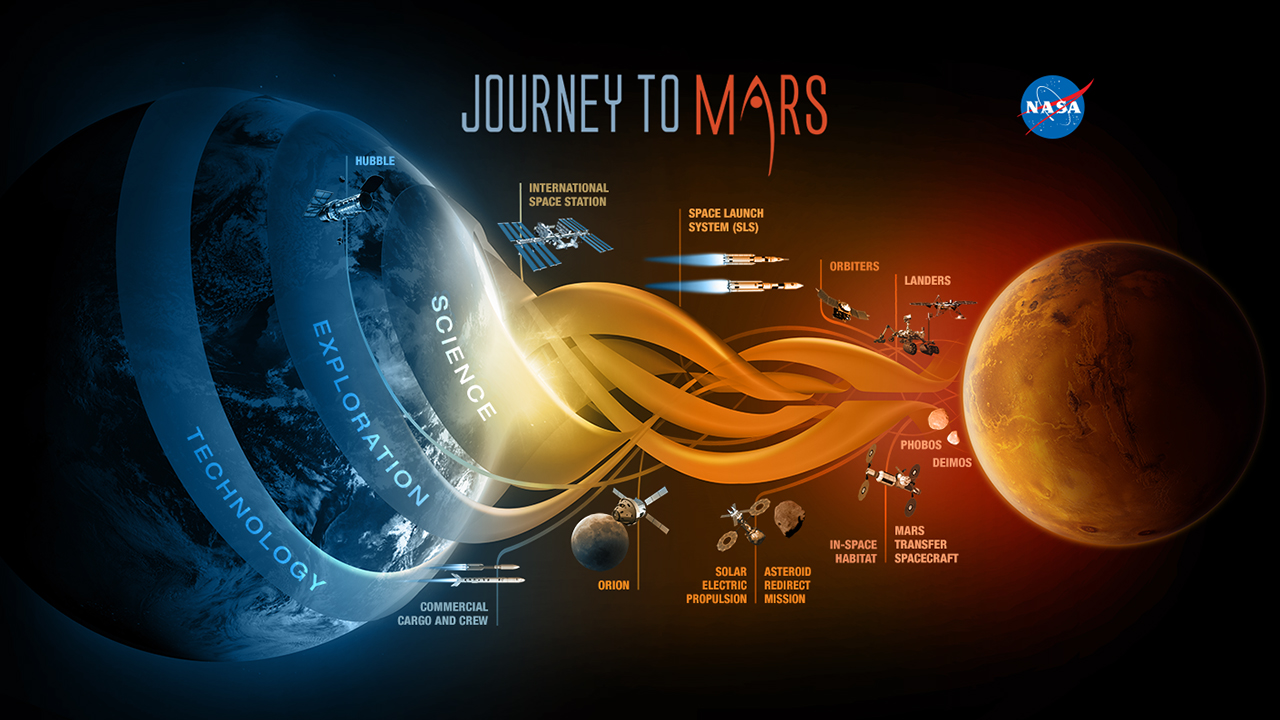
Mars is the fourth planet from the Sun and the second-smallest planet in the Solar System, after Mercury. Named after the Roman god of war, it is often referred to as the "Red Planet" because the iron oxide prevalent on its surface gives it a reddish appearance. Mars is a terrestrial planet with a thin atmosphere, having surface features reminiscent both of the impact craters of the Moon and the valleys, deserts, and polar ice caps of Earth. The rotational period and seasonal cycles of Mars are likewise similar to those of Earth, as is the tilt that produces the seasons. Mars is the site of Olympus Mons, the largest volcano and second-highest known mountain in the Solar System, and of Valles Marineris, one of the largest canyons in the Solar System. The smooth Borealis basin in the northern hemisphere covers 40% of the planet and may be a giant impact feature. Mars has two moons, Phobos and Deimos, which are small and irregularly shaped. These may be captured asteroids, similar to 5261 Eureka, a Mars trojan.
There are ongoing investigations assessing the past habitability potential of Mars, as well as the possibility of extant life. Future astrobiology missions are planned, including the Mars 2020 and ExoMars rovers. Liquid water cannot exist on the surface of Mars due to low atmospheric pressure, which is about 6⁄1000 that of the Earth's, except at the lowest elevations for short periods. The two polar ice caps appear to be made largely of water. The volume of water ice in the south polar ice cap, if melted, would be sufficient to cover the entire planetary surface to a depth of 11 meters (36 ft). On November 22, 2016, NASA reported finding a large amount of underground ice in the Utopia Planitia region of Mars. The volume of water detected has been estimated to be equivalent to the volume of water in Lake Superior.
Mars can easily be seen from Earth with the naked eye on certain evenings, as can its reddish coloring. Its apparent magnitude reaches −2.91, which is surpassed only by Jupiter, Venus, the Moon, and the Sun. Optical ground-based telescopes are typically limited to resolving features about 300 kilometers (190 mi) across when Earth and Mars are closest because of Earth's atmosphere. Using information about Mars' mass, size and the structure of its gravity field, scientists have determined the different densities of Mars' interior structure. Mars' core has twice the concentration of lighter elements than the Earth, and is probably made from iron, nickel and sulphur (a lighter element) and is partially fluid. The mantle and crust are both made from silica rich rocks. Mars crust is much thicker than Earth, between 50 - 125 km deep (compared to Earth's average of 40 km.
Elon Musk plans to get 1 million people to Mars. At a conference in Mexico today (Sept. 27), the SpaceX founder and CEO unveiled the company's Interplanetary Transport System (ITS), which will combine the most powerful rocket ever built with a spaceship designed to carry at least 100 people to the Red Planet per flight. If all goes according to plan, the reusable ITS will help humanity establish a permanent, self-sustaining colony on the Red Planet within the next 50 to 100 years, Musk said at the International Astronautical Congress in Guadalajara.
"What I really want to do here is to make Mars seem possible — make it seem as though it's something that we could do in our lifetimes, and that you can go, but living there is the easy part<" he said.
Elon musk / CEO and founder of Tesla motors and SpaceX
There would still be many questions that would need asking and situations would need resolving before we even stepped foot on mars, such as temperature day/night, time and timezones, resources humans need to live and build such as water, food, metals.
The possibility of life on Mars is a subject of significant interest to astrobiology due to the planet's proximity and similarities to Earth. To date no proof has been found of past or present life on Mars. However, cumulative evidence is now building that the ancient surface environment of Mars had liquid water and may have been habitable for microorganisms. The existence of habitable conditions does not necessarily indicate the presence of life. Scientific searches for evidence of life began in the 19th century, and they continue today via telescopic investigations and landed missions. While early work focused on phenomenology and bordered on fantasy, modern scientific inquiry has emphasized the search for water, chemical biosignatures in the soil and rocks at the planet's surface, and biomarker gases in the atmosphere. On November 22, 2016, NASA reported finding a large amount of underground ice in the Utopia Planitia region of Mars. The volume of water detected has been estimated to be equivalent to the volume of water in Lake Superior. Mars is of particular interest for the study of the origins of life because of its similarity to the early Earth. This is especially so since Mars has a cold climate, and lacks plate tectonics or continental drift, so it has remained almost unchanged since the end of the Hesperian period. At least two thirds of Mars's surface is more than 3.5 billion years old, and Mars may thus hold the best record of the prebiotic conditions leading to abiogenesis, even if life does not or has never existed there.
On January 24, 2014, NASA reported that the Curiosity and Opportunity rovers started searching for evidence of past life, including a biosphere based on autotrophic, chemotrophic, or chemolithoautotrophic microorganisms, as well as ancient water, including fluvio-lacustrine environments (plains related to ancient rivers or lakes) that may have been habitable. The search for evidence of habitability, taphonomy (related to fossils), and organic carbon on the planet Mars is now a primary NASA objective.
Mars is the fourth planet from the Sun and the second-smallest planet in the Solar System, after Mercury. Named after the Roman god of war, it is often referred to as the "Red Planet" because the iron oxide prevalent on its surface gives it a reddish appearance. Mars is a terrestrial planet with a thin atmosphere, having surface features reminiscent both of the impact craters of the Moon and the valleys, deserts, and polar ice caps of Earth. The rotational period and seasonal cycles of Mars are likewise similar to those of Earth, as is the tilt that produces the seasons. Mars is the site of Olympus Mons, the largest volcano and second-highest known mountain in the Solar System, and of Valles Marineris, one of the largest canyons in the Solar System. The smooth Borealis basin in the northern hemisphere covers 40% of the planet and may be a giant impact feature. Mars has two moons, Phobos and Deimos, which are small and irregularly shaped. These may be captured asteroids, similar to 5261 Eureka, a Mars trojan.
There are ongoing investigations assessing the past habitability potential of Mars, as well as the possibility of extant life. Future astrobiology missions are planned, including the Mars 2020 and ExoMars rovers. Liquid water cannot exist on the surface of Mars due to low atmospheric pressure, which is about 6⁄1000 that of the Earth's, except at the lowest elevations for short periods. The two polar ice caps appear to be made largely of water. The volume of water ice in the south polar ice cap, if melted, would be sufficient to cover the entire planetary surface to a depth of 11 meters (36 ft). On November 22, 2016, NASA reported finding a large amount of underground ice in the Utopia Planitia region of Mars. The volume of water detected has been estimated to be equivalent to the volume of water in Lake Superior.
Mars can easily be seen from Earth with the naked eye on certain evenings, as can its reddish coloring. Its apparent magnitude reaches −2.91, which is surpassed only by Jupiter, Venus, the Moon, and the Sun. Optical ground-based telescopes are typically limited to resolving features about 300 kilometers (190 mi) across when Earth and Mars are closest because of Earth's atmosphere. Using information about Mars' mass, size and the structure of its gravity field, scientists have determined the different densities of Mars' interior structure. Mars' core has twice the concentration of lighter elements than the Earth, and is probably made from iron, nickel and sulphur (a lighter element) and is partially fluid. The mantle and crust are both made from silica rich rocks. Mars crust is much thicker than Earth, between 50 - 125 km deep (compared to Earth's average of 40 km.
Elon Musk plans to get 1 million people to Mars. At a conference in Mexico today (Sept. 27), the SpaceX founder and CEO unveiled the company's Interplanetary Transport System (ITS), which will combine the most powerful rocket ever built with a spaceship designed to carry at least 100 people to the Red Planet per flight. If all goes according to plan, the reusable ITS will help humanity establish a permanent, self-sustaining colony on the Red Planet within the next 50 to 100 years, Musk said at the International Astronautical Congress in Guadalajara.
"What I really want to do here is to make Mars seem possible — make it seem as though it's something that we could do in our lifetimes, and that you can go, but living there is the easy part<" he said.
Elon musk / CEO and founder of Tesla motors and SpaceX
There would still be many questions that would need asking and situations would need resolving before we even stepped foot on mars, such as temperature day/night, time and timezones, resources humans need to live and build such as water, food, metals.
The possibility of life on Mars is a subject of significant interest to astrobiology due to the planet's proximity and similarities to Earth. To date no proof has been found of past or present life on Mars. However, cumulative evidence is now building that the ancient surface environment of Mars had liquid water and may have been habitable for microorganisms. The existence of habitable conditions does not necessarily indicate the presence of life. Scientific searches for evidence of life began in the 19th century, and they continue today via telescopic investigations and landed missions. While early work focused on phenomenology and bordered on fantasy, modern scientific inquiry has emphasized the search for water, chemical biosignatures in the soil and rocks at the planet's surface, and biomarker gases in the atmosphere. On November 22, 2016, NASA reported finding a large amount of underground ice in the Utopia Planitia region of Mars. The volume of water detected has been estimated to be equivalent to the volume of water in Lake Superior. Mars is of particular interest for the study of the origins of life because of its similarity to the early Earth. This is especially so since Mars has a cold climate, and lacks plate tectonics or continental drift, so it has remained almost unchanged since the end of the Hesperian period. At least two thirds of Mars's surface is more than 3.5 billion years old, and Mars may thus hold the best record of the prebiotic conditions leading to abiogenesis, even if life does not or has never existed there.
On January 24, 2014, NASA reported that the Curiosity and Opportunity rovers started searching for evidence of past life, including a biosphere based on autotrophic, chemotrophic, or chemolithoautotrophic microorganisms, as well as ancient water, including fluvio-lacustrine environments (plains related to ancient rivers or lakes) that may have been habitable. The search for evidence of habitability, taphonomy (related to fossils), and organic carbon on the planet Mars is now a primary NASA objective.
Wednesday, 9 November 2016
CASE 455 - The history of paraguay
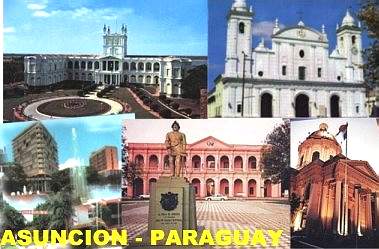
For much of the early history of the Spanish empire it is Asunción, rather than Buenos Aires, which is the colonial centre for the entire region south of Brazil. The first settlement at Buenos Aires is established in 1536. In 1537 colonists construct a stockade fort hundreds of miles up the Paraná and Paraguay rivers. Completing their work on Assumption Day, they call the place Asunción. In 1541 Buenos Aires succumbs to attacks from Indian tribes. The settlers at the mouth of the great river system abandon the site and escape upstream to Asunción. Almost forty years pass before colonists from Asunción return to the site of Buenos Aires and re-establish the town. Asunción has many advantages. Its longer continuous existence makes it the traditional centre of Spanish rule in the region. Economically it enjoys a commanding position in the interior, on the route leading up through the Andes into Peru. Yet it is also accessible by river from the Atlantic for ships drawing anything up to nine feet. This city becomes the starting point for Jesuit missionaries, as they press further into the interior to establish the famous reducciones of Paraguay. And it is subsequently the centre of growing colonial hostility to the missionaries, when their settlements become powerful - resulting eventually in armed raids on the missions and the expulsion of the Jesuits in 1767. A severe blow is struck to the pride of Asunción when its offspring city, Buenos Aires, is made in 1776 the capital of the new viceroyalty of La Plata. Resentment of the pretensions of the new capital is no doubt part of the reason why the citizens of Asunción refuse to join Buenos Aires in 1810 in its declaration of independence from Spain. An attempt at coercion by an Argentinian army under Manuel Belgrano only stiffens their resolve. However the Spanish governor of the province achieves what Belgrano cannot, when he enlists Portuguese help from Brazil against the Argentinians. This is too much for Asunción. In 1811 the colonists throw out the governor and declare their own independence as the republic of Paraguay.
A time of three caudÃllos: 1814-1870
After a brief period of anarchy, the first of Paraguay's long series of caudÃllos emerges. José Gaspar RodrÃguez Francia is elected dictator in 1814 and three years later secures the office for life. Using his unlimited powers, he adopts a rigidly isolationist policy - treating Paraguay almost like a political microcosm, with himself playing the role of an 18th-century enlightened despot. He allows no contact or commerce with other nations, but within Paraguay he actively encourages agricultural and industrial improvements to make his isolated realm economically self-sufficient. An efficient army is built up to safeguard the frontiers. Though verging on madness, Francia's measures reflect to some extent the special nature of Paraguay. Ethnically it is a more homogeneous community than others in south America. The Spanish have always been a small minority here among the Guarani Indians, and from the start a mixing of the races is accepted as normal. By the 19th century nearly all Paraguayans are mestizos. After his death in 1840 there is a brief interim before a new dictator is securely established. Carlos Antonio López, coming to power in 1844, ends Francia's policy of isolationism but continues to strengthen the nation by promoting industry, building railways and providing the army with modern equipment and fortifications. The same programme is continued by Francisco Solano López, who seizes power on his father's death in 1862. He gives Paraguay a telegraph network, but his main passion is the army. He builds it up to a regular force of 60,000 men and he imports German officers to train them. But the possession of this strength tempts López into an adventure which is a disaster for Paraguay. Flexing his muscles, López picks a quarrel in 1864 with Brazil. The pretext is Brazilian intervention in a civil war in Uruguay. In response López marches north to capture the Brazilian town of Corumbá. Then, when refused permission to cross Argentinian territory for an invasion into southern Brazil, he responds by attacking the Argentinian town of Corrientes in April 1865. Amazingly López holds out against his powerful coalition of enemies for five years during the Civil war, but this is a terrible time for Paraguay. López's control becomes more tyrannical (in 1868 he executes several hundred citizens accused of joining in a plot against him) and the casualties of the war itself are appalling. As many as 300,000 people, rather more than half the population of the country, are calculated to have died during the five years of the conflict. Asunción is captured by the allies in 1869. López continues a guerrilla campaign until he is caught and shot by Brazilian troops in 1870. In the aftermath of the war Brazil and Argentina annexe large sections of Paraguay. Together they occupy the rest of the country until 1876.
Liberales and Colorados: 1870-1932
After the death of López in 1870 Paraguay acquires a constitution which remains, technically, the basis of political life in the nation until 1940. With the emergence of an electoral system, two parties are formed - the Liberales and the Colorados, reflecting the standard Liberal and conservative clash prevailing elsewhere at the time. In practice power rarely changes hands through the ballot box. Successive regimes result more often from coups and military intervention. Paraguay remains inward-loooking, concerned with its own tumultuous affairs. Not until the 1930s does the republic again become involved in a major international conflict. The issue is rivalry with neighbouring Bolivia over the Chaco region.
Read more: http://www.historyworld.net/wrldhis/PlainTextHistories.asp?ParagraphID=nuo#ixzz4SoaexC1h
For much of the early history of the Spanish empire it is Asunción, rather than Buenos Aires, which is the colonial centre for the entire region south of Brazil. The first settlement at Buenos Aires is established in 1536. In 1537 colonists construct a stockade fort hundreds of miles up the Paraná and Paraguay rivers. Completing their work on Assumption Day, they call the place Asunción. In 1541 Buenos Aires succumbs to attacks from Indian tribes. The settlers at the mouth of the great river system abandon the site and escape upstream to Asunción. Almost forty years pass before colonists from Asunción return to the site of Buenos Aires and re-establish the town. Asunción has many advantages. Its longer continuous existence makes it the traditional centre of Spanish rule in the region. Economically it enjoys a commanding position in the interior, on the route leading up through the Andes into Peru. Yet it is also accessible by river from the Atlantic for ships drawing anything up to nine feet. This city becomes the starting point for Jesuit missionaries, as they press further into the interior to establish the famous reducciones of Paraguay. And it is subsequently the centre of growing colonial hostility to the missionaries, when their settlements become powerful - resulting eventually in armed raids on the missions and the expulsion of the Jesuits in 1767. A severe blow is struck to the pride of Asunción when its offspring city, Buenos Aires, is made in 1776 the capital of the new viceroyalty of La Plata. Resentment of the pretensions of the new capital is no doubt part of the reason why the citizens of Asunción refuse to join Buenos Aires in 1810 in its declaration of independence from Spain. An attempt at coercion by an Argentinian army under Manuel Belgrano only stiffens their resolve. However the Spanish governor of the province achieves what Belgrano cannot, when he enlists Portuguese help from Brazil against the Argentinians. This is too much for Asunción. In 1811 the colonists throw out the governor and declare their own independence as the republic of Paraguay.
A time of three caudÃllos: 1814-1870
After a brief period of anarchy, the first of Paraguay's long series of caudÃllos emerges. José Gaspar RodrÃguez Francia is elected dictator in 1814 and three years later secures the office for life. Using his unlimited powers, he adopts a rigidly isolationist policy - treating Paraguay almost like a political microcosm, with himself playing the role of an 18th-century enlightened despot. He allows no contact or commerce with other nations, but within Paraguay he actively encourages agricultural and industrial improvements to make his isolated realm economically self-sufficient. An efficient army is built up to safeguard the frontiers. Though verging on madness, Francia's measures reflect to some extent the special nature of Paraguay. Ethnically it is a more homogeneous community than others in south America. The Spanish have always been a small minority here among the Guarani Indians, and from the start a mixing of the races is accepted as normal. By the 19th century nearly all Paraguayans are mestizos. After his death in 1840 there is a brief interim before a new dictator is securely established. Carlos Antonio López, coming to power in 1844, ends Francia's policy of isolationism but continues to strengthen the nation by promoting industry, building railways and providing the army with modern equipment and fortifications. The same programme is continued by Francisco Solano López, who seizes power on his father's death in 1862. He gives Paraguay a telegraph network, but his main passion is the army. He builds it up to a regular force of 60,000 men and he imports German officers to train them. But the possession of this strength tempts López into an adventure which is a disaster for Paraguay. Flexing his muscles, López picks a quarrel in 1864 with Brazil. The pretext is Brazilian intervention in a civil war in Uruguay. In response López marches north to capture the Brazilian town of Corumbá. Then, when refused permission to cross Argentinian territory for an invasion into southern Brazil, he responds by attacking the Argentinian town of Corrientes in April 1865. Amazingly López holds out against his powerful coalition of enemies for five years during the Civil war, but this is a terrible time for Paraguay. López's control becomes more tyrannical (in 1868 he executes several hundred citizens accused of joining in a plot against him) and the casualties of the war itself are appalling. As many as 300,000 people, rather more than half the population of the country, are calculated to have died during the five years of the conflict. Asunción is captured by the allies in 1869. López continues a guerrilla campaign until he is caught and shot by Brazilian troops in 1870. In the aftermath of the war Brazil and Argentina annexe large sections of Paraguay. Together they occupy the rest of the country until 1876.
Liberales and Colorados: 1870-1932
After the death of López in 1870 Paraguay acquires a constitution which remains, technically, the basis of political life in the nation until 1940. With the emergence of an electoral system, two parties are formed - the Liberales and the Colorados, reflecting the standard Liberal and conservative clash prevailing elsewhere at the time. In practice power rarely changes hands through the ballot box. Successive regimes result more often from coups and military intervention. Paraguay remains inward-loooking, concerned with its own tumultuous affairs. Not until the 1930s does the republic again become involved in a major international conflict. The issue is rivalry with neighbouring Bolivia over the Chaco region.
Read more: http://www.historyworld.net/wrldhis/PlainTextHistories.asp?ParagraphID=nuo#ixzz4SoaexC1h
Thursday, 27 October 2016
CASE 454 - The history of music - part 3 / 1900's to 1950
Please take a look at this webpage, it has every genre of music ever created from start to finish
http://everynoise.com/engenremap.html
!900's to 1950
1880s-1890s phonograph (thank you, Edison!) starts growing in popularity; Louis Glass installs the first coin-operated one; predecessor to jukebox
sheet music becoming less expensive; booming sales of Scott Joplin's "Maple Leaf Rag"; ragtime flourishes in Storyville, LA (written in 2/4 + trio section; not improvised like jazz) 1900-1910s 1900: "His Master's Voice" est. by E.R. Johnson; cylinder phonograph co. // beginnings of vaudeville musical theatre // Symphony Hall built in Boston, MA
1902: Ferdinand Joseph "Jelly Roll" Norton (17) started playing in New Orleans; "father of the jazz piano" // Claude Debussy introduces impressionism to music through his opera, "Pelléas and Mélisande" in Paris // pianola released by the Aeolian Co.
1903: "Walker and Williams in Dahomey" becomes first African-American Broadway production // Wilbur Sweatman records "Maple Leaf Rag"
1905: Harvard U grants first PhD in Music
1906: victrola gramophone introduced by Victor Talking Machine Co.; wildly popular 'til 1920s The Roaring Twenties aftermath of WWI; rising popularity in musical culture/Broadway // increased fascination with notion of modernity & breaking from "old" traditions // Chicago becomes jazz capital
Golden Age of radio; mass broadcasting; record companies in decline
Harlem Renaissance + the age of jazz: Duke Ellington, Louis Armstrong, King Oliver 1900-1910s 1907: Florenz Ziegfield launches "Ziegfield Follies," setting standard for Broadway shows ("current topics, comic routines...the ever-present gorgeous girls")
1909: gvt. passes Copyright Act, "to secure royalties for composers on the sale of recordings and public performances" // first usage of "jazz" in newspaper
1911: creation of the "barbershop quartet"
1913: Apollo Theatre opens in NY
1915: Jelly Roll Morton creates "Jelly Roll Blues," becomes known as the first jazz composer
1916: "When the Saints Go Marching In" published in a Baptist hymnal
1919: Prohibition takes a stand; may have helped further the development/refinement of jazz music 1930s-1940s Swing/Crooner era: Bing Crosby, Frank Sinatra, Benny Goodman
jazz still in full "swing," notable female artists: Ella Fitzgerald + Billie Holiday
rise of country/"hillbilly" music: Roy Rogers; became integrated into films // honky-tonk: fused Western swing + blues; melancholy themes 1950s classic pop: Patti Page ("Tennessee Waltz," "[How Much Is That] Doggie in the Window?")
1950: Little Richard dominated music scene with introduction of R&B ("Tutti Frutti," "Long Tall Sally"
latter 1950s: Rock'n'Roll; namely, Elvis Presley, Pat Boone (first teen idol) Bibliography
"1920's Music." The 1920's - Roaring Twenties. N.p., n.d. Web. 13 Feb. 2013.
"Jazz Culture: The 1920s." American Jazz Culture in the 1920s. University of Minnesota Duluth , n.d. Web. 19 Feb. 2013.
"Musical Trends of the 1930s and 1940s."Music in 1930s and 1940s America. N.p., n.d. Web. 13 Feb. 2013.
"The History of Recorded Music." Music CD Industry. IFPI, n.d. Web. 13 Feb. 2013.
Estrella, Espie. "Music of the 20th Century - 1900 to 1960." Music Education. About.com, n.d. Web. 13 Feb. 2013.
Scaruffi, Piero . " A History of the Musical." History of Popular Music. N.p., n.d. Web. 13 Feb. 2013.
Wednesday, 7 September 2016
Case 453 - The evolution of human intelligence and consciousness
Human intelligence
The evolution of human intelligence is closely tied to the evolution of the human brain and to the origin of language. The timeline of human evolution spans approximately 7 million years from the separation of the Pan genus until the emergence of behavioral modernity by 50,000 years ago. The first 3 million years of this timeline concern Sahelanthropus, the following 2 million concern Australopithecus and the final 2 million span the history of actual human genus in the Paleolithic era. Many traits of human intelligence, such as empathy, theory of mind, mourning, ritual, and the use of symbols and tools, are apparent in great apes although in less sophisticated forms than found in humans, such as great ape language. A 2008 study argues that human cleverness is simply selected within the context of sexual selection as an honest signal of genetic resistance against parasites and pathogens. The number of people with severe cognitive impairment caused by childhood viral infections like meningitis, protists like Toxoplasma and Plasmodium, and animal parasites like intestinal worms and schistosomes is estimated to be in the hundreds of millions. Even more people live with moderate mental damages, such as inability to complete difficult tasks, that are not classified as ‘diseases’ by medical standards, may still be considered as inferior mates by potential sexual partners. Thus, widespread, virulent, and archaic infections are greatly involved in natural selection for cognitive abilities. People infected with parasites may have brain damage and obvious maladaptive behavior in addition to visible signs of disease. Smarter people can more skillfully learn to distinguish safe non-polluted water and food from unsafe kinds and learn to distinguish mosquito infested areas from safe areas. Smarter people can more skillfully find and develop safe food sources and living environments. Given this situation, preference for smarter child-bearing/rearing partners increases the chance that their descendants will inherit the best resistance alleles, not only for immune system resistance to disease, but also smarter brains for learning skills in avoiding disease and selecting nutritious food. When people search for mates based on their success, wealth, reputation, disease-free body appearance, or psychological traits such as benevolence or confidence; the effect is to select for superior intelligence that results in superior disease resistance.
Human evolution is the evolutionary process that led to the emergence of anatomically modern humans. The topic typically focuses on the evolutionary history of the primates—in particular the genus Homo, and the emergence of Homo sapiens as a distinct species of the hominids (or great apes) rather than studying the earlier history that led to the primates. The study of human evolution involves many scientific disciplines, including physical anthropology, primatology, archaeology, paleontology, neurobiology, ethology, linguistics, evolutionary psychology, embryology and genetics. Genetic studies show that primates diverged from other mammals about 85 million years ago, in the Late Cretaceous period, and the earliest fossils appear in the Paleocene, around 55 million years ago. Within the Hominoidea (apes) superfamily, the Hominidae family diverged from the Hylobatidae (gibbon) family some 15–20 million years ago; African great apes (subfamily Homininae) diverged from orangutans (Ponginae) about 14 million years ago; the Hominini tribe (humans, Australopithecines and other extinct biped genera, and chimpanzees) parted from the Gorillini tribe (gorillas) between 9 million years ago and 8 million years ago; and, in turn, the subtribes Hominina (humans and biped ancestors) and Panina (chimps) separated about 7.5 million years ago to 5.6 million years ago.
The basic adaptation of the hominin line is bipedalism. The earliest bipedal hominin is considered to be either Sahelanthropus or Orrorin; alternatively, either Sahelanthropus or Orrorin may instead be the last shared ancestor between chimps and humans. Ardipithecus, a full biped, arose somewhat later, and the early bipeds eventually evolved into the australopithecines, and later into the genus Homo.
The earliest documented representative of the genus Homo is Homo habilis, which evolved around 2.8 million years ago, and is arguably the earliest species for which there is positive evidence of the use of stone tools. The brains of these early hominins were about the same size as that of a chimpanzee, although it has been suggested that this was the time in which the human SRGAP2 gene doubled, producing a more rapid wiring of the frontal cortex. During the next million years a process of rapid encephalization occurred, and with the arrival of Homo erectus and Homo ergaster in the fossil record, cranial capacity had doubled to 850 cm3. (Such an increase in human brain size is equivalent to each generation having 125,000 more neurons than their parents.) It is believed that Homo erectus and Homo ergaster were the first to use fire and complex tools, and were the first of the hominin line to leave Africa, spreading throughout Africa, Asia, and Europe between 1.3 to 1.8 million years ago.
According to the recent African origin of modern humans theory, modern humans evolved in Africa possibly from Homo heidelbergensis, Homo rhodesiensis or Homo antecessor and migrated out of the continent some 50,000 to 100,000 years ago, gradually replacing local populations of Homo erectus, Denisova hominins, Homo floresiensis and Homo neanderthalensis. Archaic Homo sapiens, the forerunner of anatomically modern humans, evolved in the Middle Paleolithic between 400,000 and 250,000 years ago. Recent DNA evidence suggests that several haplotypes of Neanderthal origin are present among all non-African populations, and Neanderthals and other hominins, such as Denisovans, may have contributed up to 6% of their genome to present-day humans, suggestive of a limited inter-breeding between these species. The transition to behavioral modernity with the development of symbolic culture, language, and specialized lithic technology happened around 50,000 years ago according to some anthropologists although others point to evidence that suggests that a gradual change in behavior took place over a longer time span.
Human consciousness
Humans are born with a rudimentary consciousness that matures with age. The baseline for what most humans consider consciousness includes the ability to think abstractly in words and form strong memories. Humans begin to think in words and abstract concepts around age 3, and are forming strong memories by that time. Somewhere between age 2 and 3 humans start using words to form logical connections, this is where the fundamentals of adult human consciousness begin.
All in the Mind
The key to this alternative view is the fact that all our experiences—all our perceptions, sensations, dreams, thoughts and feelings—are forms appearing in consciousness. It doesn't always seem that way. When I see a tree it seems as if I am seeing the tree directly. But science tells us something completely different is happening. Light entering the eye triggers chemical reactions in the retina, these produce electro-chemical impulses which travel along nerve fibers to the brain. The brain analyses the data it receives, and then creates its own picture of what is out there. I then have the experience of seeing a tree. But what I am actually experiencing is not the tree itself, only the image that appears in the mind. This is true of everything I experience. Everything we know, perceive, and imagine, every color, sound, sensation, every thought and every feeling, is a form appearing in the mind. It is all an in-forming of consciousness.
The idea that we never experience the physical world directly has intrigued many philosophers. Most notable was the eighteenth-century German philosopher Immanual Kant, who drew a clear distinction between the form appearing in the mind—what he called the phenomenon (a Greek word meaning "that which appears to be")—and the world that gives rise to this perception, which he called the noumenon (meaning “that which is apprehended"). All we know, Kant insisted, is the phenomenon. The noumenon, the “thing-in-itself,” remains forever beyond our knowing.
Human intelligence
The evolution of human intelligence is closely tied to the evolution of the human brain and to the origin of language. The timeline of human evolution spans approximately 7 million years from the separation of the Pan genus until the emergence of behavioral modernity by 50,000 years ago. The first 3 million years of this timeline concern Sahelanthropus, the following 2 million concern Australopithecus and the final 2 million span the history of actual human genus in the Paleolithic era. Many traits of human intelligence, such as empathy, theory of mind, mourning, ritual, and the use of symbols and tools, are apparent in great apes although in less sophisticated forms than found in humans, such as great ape language. A 2008 study argues that human cleverness is simply selected within the context of sexual selection as an honest signal of genetic resistance against parasites and pathogens. The number of people with severe cognitive impairment caused by childhood viral infections like meningitis, protists like Toxoplasma and Plasmodium, and animal parasites like intestinal worms and schistosomes is estimated to be in the hundreds of millions. Even more people live with moderate mental damages, such as inability to complete difficult tasks, that are not classified as ‘diseases’ by medical standards, may still be considered as inferior mates by potential sexual partners. Thus, widespread, virulent, and archaic infections are greatly involved in natural selection for cognitive abilities. People infected with parasites may have brain damage and obvious maladaptive behavior in addition to visible signs of disease. Smarter people can more skillfully learn to distinguish safe non-polluted water and food from unsafe kinds and learn to distinguish mosquito infested areas from safe areas. Smarter people can more skillfully find and develop safe food sources and living environments. Given this situation, preference for smarter child-bearing/rearing partners increases the chance that their descendants will inherit the best resistance alleles, not only for immune system resistance to disease, but also smarter brains for learning skills in avoiding disease and selecting nutritious food. When people search for mates based on their success, wealth, reputation, disease-free body appearance, or psychological traits such as benevolence or confidence; the effect is to select for superior intelligence that results in superior disease resistance.
Human evolution is the evolutionary process that led to the emergence of anatomically modern humans. The topic typically focuses on the evolutionary history of the primates—in particular the genus Homo, and the emergence of Homo sapiens as a distinct species of the hominids (or great apes) rather than studying the earlier history that led to the primates. The study of human evolution involves many scientific disciplines, including physical anthropology, primatology, archaeology, paleontology, neurobiology, ethology, linguistics, evolutionary psychology, embryology and genetics. Genetic studies show that primates diverged from other mammals about 85 million years ago, in the Late Cretaceous period, and the earliest fossils appear in the Paleocene, around 55 million years ago. Within the Hominoidea (apes) superfamily, the Hominidae family diverged from the Hylobatidae (gibbon) family some 15–20 million years ago; African great apes (subfamily Homininae) diverged from orangutans (Ponginae) about 14 million years ago; the Hominini tribe (humans, Australopithecines and other extinct biped genera, and chimpanzees) parted from the Gorillini tribe (gorillas) between 9 million years ago and 8 million years ago; and, in turn, the subtribes Hominina (humans and biped ancestors) and Panina (chimps) separated about 7.5 million years ago to 5.6 million years ago.
The basic adaptation of the hominin line is bipedalism. The earliest bipedal hominin is considered to be either Sahelanthropus or Orrorin; alternatively, either Sahelanthropus or Orrorin may instead be the last shared ancestor between chimps and humans. Ardipithecus, a full biped, arose somewhat later, and the early bipeds eventually evolved into the australopithecines, and later into the genus Homo.
The earliest documented representative of the genus Homo is Homo habilis, which evolved around 2.8 million years ago, and is arguably the earliest species for which there is positive evidence of the use of stone tools. The brains of these early hominins were about the same size as that of a chimpanzee, although it has been suggested that this was the time in which the human SRGAP2 gene doubled, producing a more rapid wiring of the frontal cortex. During the next million years a process of rapid encephalization occurred, and with the arrival of Homo erectus and Homo ergaster in the fossil record, cranial capacity had doubled to 850 cm3. (Such an increase in human brain size is equivalent to each generation having 125,000 more neurons than their parents.) It is believed that Homo erectus and Homo ergaster were the first to use fire and complex tools, and were the first of the hominin line to leave Africa, spreading throughout Africa, Asia, and Europe between 1.3 to 1.8 million years ago.
According to the recent African origin of modern humans theory, modern humans evolved in Africa possibly from Homo heidelbergensis, Homo rhodesiensis or Homo antecessor and migrated out of the continent some 50,000 to 100,000 years ago, gradually replacing local populations of Homo erectus, Denisova hominins, Homo floresiensis and Homo neanderthalensis. Archaic Homo sapiens, the forerunner of anatomically modern humans, evolved in the Middle Paleolithic between 400,000 and 250,000 years ago. Recent DNA evidence suggests that several haplotypes of Neanderthal origin are present among all non-African populations, and Neanderthals and other hominins, such as Denisovans, may have contributed up to 6% of their genome to present-day humans, suggestive of a limited inter-breeding between these species. The transition to behavioral modernity with the development of symbolic culture, language, and specialized lithic technology happened around 50,000 years ago according to some anthropologists although others point to evidence that suggests that a gradual change in behavior took place over a longer time span.
Human consciousness
Humans are born with a rudimentary consciousness that matures with age. The baseline for what most humans consider consciousness includes the ability to think abstractly in words and form strong memories. Humans begin to think in words and abstract concepts around age 3, and are forming strong memories by that time. Somewhere between age 2 and 3 humans start using words to form logical connections, this is where the fundamentals of adult human consciousness begin.
All in the Mind
The key to this alternative view is the fact that all our experiences—all our perceptions, sensations, dreams, thoughts and feelings—are forms appearing in consciousness. It doesn't always seem that way. When I see a tree it seems as if I am seeing the tree directly. But science tells us something completely different is happening. Light entering the eye triggers chemical reactions in the retina, these produce electro-chemical impulses which travel along nerve fibers to the brain. The brain analyses the data it receives, and then creates its own picture of what is out there. I then have the experience of seeing a tree. But what I am actually experiencing is not the tree itself, only the image that appears in the mind. This is true of everything I experience. Everything we know, perceive, and imagine, every color, sound, sensation, every thought and every feeling, is a form appearing in the mind. It is all an in-forming of consciousness.
The idea that we never experience the physical world directly has intrigued many philosophers. Most notable was the eighteenth-century German philosopher Immanual Kant, who drew a clear distinction between the form appearing in the mind—what he called the phenomenon (a Greek word meaning "that which appears to be")—and the world that gives rise to this perception, which he called the noumenon (meaning “that which is apprehended"). All we know, Kant insisted, is the phenomenon. The noumenon, the “thing-in-itself,” remains forever beyond our knowing.
Subscribe to:
Posts (Atom)