Bringing new cases, the age will share the truth & knowledge. Depicting the endless corruption, debt, hate, control and battle that is conditioned into our everyday lives. It will exist for the years 2010 to 2020 (The information age). It will be as even sided & independent as possible as we go through the greatest transition age of power & energy the human race has ever experienced
"The world, nor the universe is a small place, its 1 natural consciousness aware of itself"
Sunday, 21 October 2012
CASE 428 - The history of Luxembourg
The first written account of this country and people is found in the fifth book of Cæsar's "Commentarii de Bello Gallico. On the Lower Moselle and its tributaries dwelt at that time (53 B.C.) the powerful race of the Treviri, who, in alliance with the people under their protection (for example the Eburones under Ambiorix), at first gave the Romans great trouble, but they were soon compelled to yield to superior numbers and gradually attained the highest civilization. Under Emperor Constantine (323-337) Trier (Augusta Trevirorum) became the capital of the province Belgica prima, and later the residence of the prefects of Gaul. The Christian Faith was introduced at a very early period. Since 316 the town was the see of a bishop. As more than half of the subsequent Duchy of Lorraine belonged for centuries to the Diocese of Trier, it is a logical conclusion that the Christianization of the Ardennes proceeded principally from there. During the Germanic migration the north-eastern provinces of the Roman Empire suffered greatly. Devastated and depopulated, they were occupied by the victorious Franks. In the division of Charlemagne's empire (843) the provinces in question fell to the share of the Emperor Lothair. In the middle of the tenth century (963?) the feudal lord, Siegfried, who held rich possessions in the Forest of Ardennes, acquired the Castellum Lucilini (supposed to have been built by the Romans) with the lands in its vicinity, and styled himself Graf von Lützelburg. From the marriage of this great and good man descended Empress Saint Cunigunde, wife of Henry II, the Saint."
"The last of Siegfried's male descendents, Conrad II, died about 1126. His dominions passed first to the counts of Namur and subsequently to Ermesinde, who reigned from 1196 to 1247. She was especially noted for the impulse she gave to religious life by the foundation of monasteries. Her son and successor, Henry V (1247-81), showed the influence of his noble mother. He took part in Saint Louis's crusade against Tunis. His successor, Henry VI, remained until nearly 1288 at war near Woringen. His wife, Beatrice, had borne him two sons, both of whom attained the highest honours and excellence: Baldwin, afterwards Archbishop of Trier, and Henry, who obtained the Roman imperial crown as Henry VII (1309). The advancement of the reigning family brought no advantage to the country, as the counts wandered farther and farther from home, and concerned themselves only with the affairs of the Empire or the Kingdom of Bohemia. They endeavoured to compensate for this in a measure by raising Luxemburg to a duchy, but could not prevent part of it from crumbling away and the whole (1444) falling to Burgundy by conquest. From the House of Valois, which became extinct on the death of Charles the Bold, in 1477, the country passed to Austria, and was subject to the Spanish Habsburgs (1556-1714); then to the German Habsburgs (1714-95), and finally to the French (until 1814)."
After the overthrow of Napoleon, better times began for Luxemburg. The Congress of Vienna decided that as an appendage of the newly created Kingdom of the Netherlands with the rank of grand duchy, it should become a part of the German Confederation. June 9, 1815, after 400 years of domination by various European nations, Luxembourg was made a grand duchy by the Congress of Vienna. It was granted political autonomy in 1838 under King William I of the Netherlands, who also was the Grand Duke of Luxembourg. The country considers 1835 to be its year of independence. In 1867, Luxembourg was recognized as independent and guaranteed perpetual neutrality. After being occupied by Germany in both World Wars, however, Luxembourg abandoned neutrality and became a charter member of the North Atlantic Treaty Organization (NATO) in 1949.
The present sovereign, Grand Duke Henri, succeeded his father, Grand Duke Jean on October 7, 2000. Grand Duke Jean announced his decision to abdicate in December 1999, after a 35 year reign.
Since the end of World War II, the Christian Social Party (CSV) has usually been the dominant partner in governing coalitions. The Roman Catholic-oriented CSV resembles Christian Democratic parties in other west European countries and enjoys broad popular support. However, in June 1999, national elections ushered in a new government. For the first time since 1974, the Socialist Party (LSAP) ceded its junior coalition position with the long-reigning CSV majority to the Liberal Democrat Party (DP).
The DP is a center party, drawing support from the professions, merchants, and urban middle class. Like other west European liberal parties, it advocates both social legislation and minimum government involvement in the economy. It also is strongly pro-NATO. In the opposition since 1984, the DP had been a partner in the three previous consecutive coalition governments.
The Green Party has received growing support since it was officially formed in 1983. It opposes both nuclear weapons and nuclear power and supports environmental and ecological preservation measures. This party generally opposes Luxembourg's military policies, including its membership in NATO.
National elections are held at least every 5 years and municipal elections every 6 years. In the June 1999 parliamentary elections, the CSV won 19, the DP 15, the LSAP 13, the ADR (a single-issue party that emerged from the LSAP focused on pension rights) 6, the "Greens" 5, and the PCL 1. Hence, for the first time since 1974, the Socialists (LSAP) ceded their junior coalition position with the long-reigning Christian Socialist (CSV) majority to the Liberal Democrats. Jean-Claude Juncker (CSV) remained for a second 5-year term as Prime Minister, and Lydie Polfer (DP), the former Luxembourg City mayor, was named Vice Prime Minister and Foreign Minister.
The language of Luxembourg is Luxembourgish, a blend of Dutch, old German, and Frankish elements. The official language of the civil service, law, and parliament is French, although criminal and legal debates are conducted partly in Luxembourgish and police case files are recorded in German. German is the primary language of the press. French and German are taught in the schools, with German spoken mainly at the primary level and French at the secondary level. Luxembourg is the 2nd richest country per capita, at $81,500 per person and has been for many years due to many banks and financial institutes being drawn to Luxembourg.
Tuesday, 9 October 2012
CASE 427 - Tax avoidance
Tax avoidance is the legal utilization of the tax regime to one's own advantage, to reduce the amount of tax that is payable by means that are within the law. The term tax mitigation is not however a synonym for tax avoidance. Its original use was by tax advisors as an alternative to the pejorative term tax avoidance. The term has also been used in the tax regulations of some jurisdictions to distinguish tax avoidance foreseen by the legislators from tax avoidance which exploits loopholes in the law. The United States Supreme Court has stated that "The legal right of an individual to decrease the amount of what would otherwise be his taxes or altogether avoid them, by means which the law permits, cannot be doubted." Tax evasion, on the other hand, is the general term for efforts by individuals, corporations, trusts and other entities to evade taxes by illegal means. Both tax avoidance and evasion can be viewed as forms of tax noncompliance, as they describe a range of activities that are unfavorable to a state's tax system.
The world’s best offshore banking and banking services can be found in the best tax havens. In the best tax havens, offshore banking can be achieved in a tax free environment. Offshore banking can be done by both individuals and corporations in some of the best tax havens available. This includes Cyprus, Luxembourg, Panama, Anguilla, Gibraltar, Dominica, Nevis, the Bahamas and Seychelles among others. Any interest earned by offshore bank accounts in the best tax havens has no taxed imposed. This guarantees the growth of capital invested in the offshore banks.
Offshore banking secrecy is synonymous with offshore tax havens. In fact it is banking secrecy which led to an increase in offshore banking clients in most offshore tax havens of the world. Banking secrecy laws simply provides protection for the information on offshore bank accounts. In the best tax havens where banking secrecy laws have been passed, the laws prohibit the disclosure of information in offshore bank accounts. Exceptions are made if a court order is handed down. Persons who divulge information of offshore bank accounts will have committed a criminal offense and are liable to serve a prison term and or pay monetary fines.
Without a doubt, an offshore tax haven provides clients with a safe place for asset protection. Many offshore clients choose to go offshore to protect their assets from prying hands and eyes. The best offshore tax havens, when utilized properly, can help investors and offshore clients reduce on their tax liabilities. When choosing an offshore tax haven it wise for offshore clients to choose a tax haven which will protect their privacy. In the best tax havens the governments work together with other authorities to ensure that the tax haven remains free from criminal activities such as money laundering.
Tax avoidance reduces government revenue and brings the tax system into disrepute, so governments need to prevent tax avoidance or keep it within limits. The obvious way to do this is to frame tax rules so that there is no scope for avoidance. In practice this has not proved achievable and has led to an ongoing battle between governments amending legislation and tax advisors' finding new scope for tax avoidance in the amended rules. To allow prompter response to tax avoidance schemes, the US Tax Disclosure Regulations (2003) require prompter and fuller disclosure than previously required, a tactic which was applied in the UK in 2004. Some countries such as Canada, Australia and New Zealand have introduced a statutory General Anti-Avoidance Rule (or General Anti-Abuse Rule, GAAR). Canada also uses Foreign Accrual Property Income rules to obviate certain types of tax avoidance. In the United Kingdom, there is no GAAR, but many provisions of the tax legislation (known as "anti-avoidance" provisions) apply to prevent tax avoidance where the main object (or purpose), or one of the main objects (or purposes), of a transaction is to enable tax advantages to be obtained. In the United States, the Internal Revenue Service distinguishes some schemes as "abusive" and therefore illegal.
In the UK, judicial doctrines to prevent tax avoidance began in IRC v Ramsay (1981) followed by Furniss v. Dawson (1984). This approach has been rejected in most commonwealth jurisdictions even in those where UK cases are generally regarded as persuasive. After two decades, there have been numerous decisions, with inconsistent approaches, and both the Revenue authorities and professional advisors remain quite unable to predict outcomes. For this reason this approach can be seen as a failure or at best only partly successful. In the judiciary, different judges have taken different attitudes. As a generalisation, for example, judges in the United Kingdom before the 1970s regarded tax avoidance with neutrality; but nowadays they may regard aggressive tax avoidance with increasing hostility.
In the UK in 2004, the Labour government announced that it would use retrospective legislation to counteract some tax avoidance schemes, and it has subsequently done so on a few occasions, notably BN66. Initiatives announced in 2010 suggest an increasing willingness on the part of HMRC to use retrospective action to counter avoidance schemes, even when no warning has been given.
The super rich get away with not paying any or little tax because some of them get payed only in Gold, some give a few million to charities and others buy people gifts, thus getting away with it
Monday, 1 October 2012
CASE 426 - Vaccinations and harmfull drugs
Vaccination is the administration of antigenic material (a vaccine) to stimulate an individual's immune system to develop adaptive immunity to a pathogen. Vaccines can prevent or ameliorate the morbidity from infection. The effectiveness of vaccination has been widely studied, but only government sponsored reports only ever see the light, but more and more are proving that most vaccins dont work especially flu vaccines, but still the government and your local doctors surgery will still be pushing it onto the people especially the elderly.
You may not have heard the explosion, but it happened, the vaccine empire is collapsing.
A review from The Cochrane Collaboration, a widely respected research-analysis team, went over all the evidence, and entered its conclusion:
In healthy adults, no flu vaccine delivers protection from the flu. It doesn't protect against transmission of flu viruses from person to person, either.
So all the promotion and all the pandering and all the scare tactics and all the "expert medical opinion" and all the media coverage...useless, worthless, and irrelevant. Billions of dollars of financed lies about flu vaccines were just that: lies. It gets worse, because the entire theory about how and why vaccines work is sitting on a razor's edge, ready to fall into the abyss of discarded fairy tales. We've been told that vaccines stimulate the immune system with a "rehearsal" of what will happen when an actual disease comes down the pipeline. When the disease does show up, the immune system will be locked and loaded, ready to destroy the attacking germ and since flu vaccines don't protect against flu or even stop the transmission of flu viruses from person to person, the so-called "rehearsing" of the immune system is merely somebody's fancy story. A legend. A myth, they just make people feel worse.
As always, The Cochrane Collaboration did an exhaustive review of all previous studies on flu vaccines they could discover. They rejected the studies that were badly constructed. In some cases, to expand available data, they contacted individual researchers who had conducted studies. Therefore, Cochrane's findings represent the best of the published literature on flu vaccines. However, because the Cochrane team owes nothing to pharmaceutical companies, they analyzed the literature with sober eyes and minds.
"The review showed that reliable evidence on influenza vaccines is thin but there is evidence of widespread manipulation of conclusions..."
The Cochrane review, published by John Wiley and Sons, appeared online on July 7, 2010.
Over two years ago. We must have missed the massive mainstream media coverage.
What? There was no massive media coverage?
Sources: http://gaia-health.com
Sunday, 30 September 2012
CASE 425 - The Brookings Institution
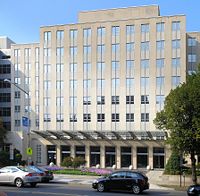
The Brookings Institution funded by many corporations is a nonprofit public policy organization based in Washington D.C or government think tank, closely linked to the roccafella family. One of Washington's oldest think tanks, Brookings conducts research and education in the social sciences, primarily in economics, metropolitan policy, governance, foreign policy, and global economy and development. Its stated mission is to "provide innovative and practical recommendations that advance three broad goals: strengthen American democracy; foster the economic and social welfare, security and opportunity of all Americans; and secure a more open, safe, prosperous, and cooperative international system". Brookings states that its scholars "represent diverse points of view," but as an institution it does not take positions and describes itself as non-partisan. Its scholars are responsible for their own research and views are considered their own
Brookings was founded in 1916 as the Institute for Government Research (IGR), with the mission of becoming "the first private organization devoted to analyzing public policy issues at the national level".
The Institution's founder, philanthropist Robert S. Brookings (1850–1932), originally financed the formation of three organizations: the Institute for Government Research, the Institute of Economics, and the Robert Brookings Graduate School affiliated with Washington University in St. Louis. The three were merged into the Brookings Institution on December 8, 1927.
During the Great Depression economists at Brookings embarked on a large scale study commissioned by President Franklin D. Roosevelt to understand the underlying causes of the depression. Brookings's first president Harold Moulton and other Brookings scholars later led an effort to oppose President Roosevelt's New Deal policies because they thought such measures were impeding economic recovery. With the entry into World War II in 1941, Brookings researchers turned their attention to aiding the administration with a series of studies on mobilization. In 1948, Brookings was asked to submit a plan for the administration of the European Recovery Program. The resulting organization scheme assured that the Marshall Plan was run carefully and on a businesslike basis. In 1952, Robert Calkins succeeded Moulton as president of the Brookings Institution. He secured grants from the Rockefeller Foundation and the Ford Foundation that put the Institution on a strong financial basis. He reorganized the Institution around the Economic Studies, Government Studies, and Foreign Policy Programs. In 1957, the Institution moved from Jackson Avenue to a new research center near Dupont Circle in Washington, DC. Kermit Gordon assumed the presidency of Brookings in 1967. He began a series of studies of program choices for the federal budget in 1969 entitled "Setting National Priorities". He also expanded the Foreign Policy Studies Program to include research in national security and defense. After the election of Richard Nixon to the presidency in 1968, the relationship between the Brookings Institution and the White House deteriorated; at one point Nixon's aide Charles Colson proposed a firebombing of the Institution. Yet throughout the 1970s, Brookings was offered more federal research contracts than it could handle.
Funders
At the end of 2004 the Brookings Institution had assets of $258 million and spent $39.7 million, while its budget has grown to more than $80 million in 2009. Its largest contributors include the Ford Foundation, the Gates Foundation, Sen. Dianne Feinstein and her husband Richard C. Blum, Bank of America, ExxonMobil, Pew Charitable Trusts, the MacArthur Foundation, the Carnegie Corporation, and the governments of the United States, Japan, Qatar, the Republic of China, the District of Columbia, and the United Kingdom.
21st Century Defense Initiative
The 21st Century Defense Initiative (21CDI) is aimed at producing research, analysis, and outreach that address three core issues: the future of war, the future of U.S. defense needs and priorities, and the future of the U.S. defense system. The Initiative draws on the knowledge from regional centers, including the Center on the United States and Europe, the Center for Northeast Asian Policy Studies, the Thornton China Center, and the Saban Center for Middle East Policy, allowing the integration of regional knowledge. P. W. Singer, author of Wired for War, serves as the Director of the 21st Century Defense Initiative, and Michael E. O'Hanlon, serves as the Director of Research. Senior Fellow Stephen P. Cohen and Vanda Felbab-Brown are also affiliated with 21CDI.
http://landdestroyer.blogspot.co.uk/2012/10/brookings-institutions-which-path-to.html
US corporate-funded Brookings 2009 report conspires against the nation of Iran. Plot includes using terrorists, provoked war, economic warfare, and covert military and political subversion against the Iranian people.
http://www.scribd.com/doc/108902116/Brookings-Institution-s-Which-Path-to-Persia-Report
Sunday, 23 September 2012
CASE 424 - The history of Singapore
Recent studies have verified that lions have never lived on Singapore but legend has it that a 14th century Sumatran prince spotted an auspicious beast (probably a Malayan tiger) upon landing on the island after a thunderstorm. Thus, the name Singapore comes from the Malay words “Singa” for lion and “Pura” for city. Prior to European settlement, the island now known as Singapore was the site of a Malay fishing village and inhabited by several hundred indigenous Orang Laut people In late 1818, Lord Hastings – the British Governor General of India – appointed Lieutenant General Sir Stamford Raffles to establish a trading station at the southern tip of the Malay peninsula. The British were extending their dominion over India and their trade with China was expanding. They saw the need for a port of call to “refit, revitalize and protect their merchant fleet” as well as to prevent any advances made by the Dutch in the East Indies.
After surveying other nearby islands in 1819, Sir Stamford Raffles and the rest of the British East India Company landed on Singapore, which was to become their strategic trading post along the spice route. Eventually Singapore became one of the most important commercial and military centers of the British Empire. The island was the third British acquisition in the Malay Peninsula after Penang (1786) and Malacca (1795). These three British Settlements (Singapore, Penang and Malacca) became the Straights Settlements in 1826, under the control of British India. By 1832, Singapore became the center of government of the three areas. On 1 April 1867, the Straights Settlements became a Crown Colony and was ruled by a governor under the jurisdiction of the Colonial Office in London.
During World War II, Singapore was occupied by the Japanese. British Prime Minister Winston Churchill described this “as the worst disaster and largest capitulation in British history”. In the aftermath of the war, the country faced staggering problems of high unemployment, slow economic growth, inadequate housing, decaying infrastructure, labor strikes and social unrest. Nevertheless, it sparked a political awakening among the local population and saw the rise of anti-colonial and nationalist sentiments, as epitomized by the slogan “Merdeka” which means “independence” in the Malay language. In 1959, Singapore became a self-governing state within the British Empire with Yusof Bin Ishak as its first Yang de-Pertuan Negara (Malay for “Someone who is the eminent Master of the State”) and Lee Kuan Yew as its first and long-standing Prime Minister (he served until 1990). Before joining the Federation of Malaysia along with Malaya, Sabah and Sarawak, Singapore declared independence from Britain unilaterally in August 1963. Two years later, Singapore left the federation after heated ideological conflicts arose between the Singapore government’s major political party called the People’s Action Party (PAP) and the federal Kuala Lumpur goverment. On 9 August 1965, Singapore officially gained sovereignty. Yusof Bin Ishak sworn in as its first president and Lee Kuan Yew remained prime minister. With independence came bleak, if not precarious economic prospects. According to Barbara Leitch Lepoer, the editor of Singapore: A Country Study (1989): “Separation from Malaysia meant the loss of Singapore’s economic hinterland, and Indonesia’s policy of military confrontation directed at Singapore and Malaysia had dried up the entrepot from that direction.” According to the same book, Singapore also faced the loss of 20 percent of its jobs with the announcement of Britain’s departure from the island’s bases in 1968.
Instead of demoralizing Singapore, these problems motivated Singapore’s leadership to focus on the nation’s economy. With Cambridge-educated lawyer Lee Kuan Yew at its helm, the Singaporean government was aggressive in promoting export-oriented, labor-extensive industrialization through a program of incentives to attract foreign investment. After all, Singapore still had its strategic location to its advantage. By 1972, one-quarter of Singapore’s manufacturing firms were either foreign-owned or joint-venture companies, and both USA and Japan were major investors. As a result of Singapore’s steady political climate, favorable investment conditions and the rapid expansion of the world economy from 1965 to 1973, the country’s Gross Domestic Product (GDP) experienced annual double-digit growth. With the economic boom of the late 1960s and 1970s, new jobs were created in the private sector. The government provision of subsidized housing, education, health services and public transportation generated new jobs in the public sector. The Central Provident Fund, the country’s comprehensive social security scheme sustained by compulsory contributions by employer and employee, provided the necessary capital for government projects and financial security for the country’s workers in their old age. By the late 1970s, the government changed its strategic focus to skill and technology-intensive, high value-added industries and away from labor-intensive manufacturing. In particular, information technology was given priority for expansion and Singapore became the world’s largest producer of disk drives and disk drive parts in 1989. In the same year, 30 percent of the country’s GDP was due to earnings from manufacturing.
Singapore’s international and financial services sector was and still is one of the fastest growing sectors of its economy accounting for nearly 25 percent of the country’s GDP in the late 1980s. In the same year, Singapore ranked with Hong Kong as the two most important Asian financial centers after Tokyo. By 1990, Singapore played host to more than 650 multinational companies and several thousand financial institutions and trading firms. On the political front, Goh Chok Tong succeeded Lee Kuan Yew and in 2004 Lee Hsien Loong, the eldest son of Lee Kuan Yew, became Singapore’s third prime minister.
SINGAPOREAN IDENTITY
Out of 4.839 million Singaporeans, 3.164 million are Singapore citizens and roughly 0.478 million are Singapore permanent residents. Chinese, Malays and Indians comprise the three official ethnic groups in the country. With such a multi-ethnic population, the country’s leadership envisioned a Singaporean identity that calls for “rugged individualism with an emphasis on excellence”.
When the British failed to protect Singapore from Japanese occupation during World War II, they lost their credibility with the Singaporeans. The aftermath sparked an outpouring of anti-colonial and nationalist sentiments. After the Merger with Malaysia and the subsequent separation, the former colonial port of Singapore become a leader in global financing and trading in the 1970s. Today, it continues to wittingly maneuver its way in the world of international trade, just as it had done in the 19th century, and a large part of that success is owed to its government’s pro-industrialization policies and excellence-oriented multi-ethnic people.
Monday, 17 September 2012
CASE 423 - Austerity
In economics, austerity refers to a policy of deficit-cutting by lowering spending via a reduction in the amount of benefits and public services provided by the democratic societies and governments in most of the worlds countries. Austerity policies are often used by governments to try to reduce their deficit spending and are sometimes coupled with increases in taxes to demonstrate long-term fiscal solvency to creditors.
Supporters of austerity predict that under expansionary fiscal contraction (EFC), a major reduction in government spending can change future expectations about taxes and government spending, encouraging private consumption and resulting in overall economic expansion.
Greece Protest Violence Flares In Athens Amid Mass Strike against austerity
Critics argue that, in periods of recession and high unemployment, austerity policies are counter-productive, because: a) reduced government spending can increase unemployment, which increases safety net spending while reducing tax revenue; b) reduced government spending reduces GDP, which means the debt to GDP ratio examined by creditors and rating agencies does not improve; and c) short-term government spending financed by deficits supports economic growth when consumers and businesses are unwilling or unable to do so.
A typical goal of austerity is to reduce the annual budget deficit without sacrificing growth, but takes money off the people and their services and food out of there mouths to make sure the minimum payments are made to the banks that the governments owe. Over time, this may reduce the overall debt burden, often measured as the ratio of public debt to GDP. During the European sovereign-debt crisis, many countries embarked on austerity programs, reducing their budget deficits relative to GDP from 2010 to 2011. For example, according to the CIA World Factbook Greece improved its budget deficit from 10.4% GDP in 2010 to 9.6% in 2011. Iceland, Italy, Ireland, Portugal, France and Spain also improved their budget deficits from 2010 to 2011 relative to GDP.
However, with the exception of Germany, each of these countries had public debt to GDP ratios that increased (worsened) from 2010 to 2011, as indicated in the chart at right. Greece's public debt to GDP ratio increased from 143% in 2010 to 165% in 2011. This indicates that despite improving budget deficits, GDP growth was not sufficient to support a decline (improvement) in the debt to GDP ratio for these countries during this period. Eurostat reported that the debt to GDP ratio for the 17 Euro area countries together was 70.1% in 2008, 79.9% in 2009, 85.3% in 2010, and 87.2% in 2011. Unemployment is another variable that might be considered in evaluating austerity measures. According to the CIA World Factbook, from 2010 to 2011, the unemployment rates in Spain, Greece, Ireland, Portugal and the UK increased. France and Italy had no significant changes, while in Germany and Iceland the unemployment rate declined.
Discretionary spending, mandatory spending, and revenue increases over nine-year intervals Another historical example of austerity was in the United States, which balanced its budget from 1998 to 2001. The basic strategy was to limit the rate of growth in defense and non-defense discretionary spending (which funds the major cabinet departments and agencies) during most of the 1990's, while growing revenues along with the economy. Comparing 1990 vs. 1999, defense and non-defense discretionary spending grew by a total of 14%, while revenues grew 77%. Public debt to GDP declined from 42.1% in 1990 to 39.4% by 1999, although it rose during the interim slightly. In contrast, from 2000–2009, discretionary spending grew by a total of 101% while revenues grew only 4%. Public debt to GDP increased from 34.7% in 2000 to 53.5% in 2009. Revenue grew nearly 25% when comparing 2000 to the pre-crisis peak in 2007, still considerably less than the prior decade
Examples of Austerity
Argentina, 1952,2012
Cuba, 1991
Czech Republic, 2010
Germany, 2011
Greece, 2010–2012
Ireland, 2010-2012
Israel, 1949–1959
Italy, 2010-2012
Japan, 2010-2012
Latvia, 2009
Mexico, 1985
Netherlands, 1982–1990, 2003–2006, 2011
Canada, 1994
Nicaragua, 1997
Palestinian Authority, 2006
Romania, 2010
Portugal, 2010–2011
Puerto Rico, 2009–2013
Spain, 1979,[49] 2010, 2012
United Kingdom, during and after the two World Wars, 2011–2014
United States, 1921, 1946
Naples, Italy 2012
The Science and Ethics of Austerity: Lessons from the US and Europe http://contemporarycondition.blogspot.co.uk/2012/03/science-and-ethics-of-austerity-lessons.html
Supporters of austerity predict that under expansionary fiscal contraction (EFC), a major reduction in government spending can change future expectations about taxes and government spending, encouraging private consumption and resulting in overall economic expansion.
Greece Protest Violence Flares In Athens Amid Mass Strike against austerity
Critics argue that, in periods of recession and high unemployment, austerity policies are counter-productive, because: a) reduced government spending can increase unemployment, which increases safety net spending while reducing tax revenue; b) reduced government spending reduces GDP, which means the debt to GDP ratio examined by creditors and rating agencies does not improve; and c) short-term government spending financed by deficits supports economic growth when consumers and businesses are unwilling or unable to do so.
A typical goal of austerity is to reduce the annual budget deficit without sacrificing growth, but takes money off the people and their services and food out of there mouths to make sure the minimum payments are made to the banks that the governments owe. Over time, this may reduce the overall debt burden, often measured as the ratio of public debt to GDP. During the European sovereign-debt crisis, many countries embarked on austerity programs, reducing their budget deficits relative to GDP from 2010 to 2011. For example, according to the CIA World Factbook Greece improved its budget deficit from 10.4% GDP in 2010 to 9.6% in 2011. Iceland, Italy, Ireland, Portugal, France and Spain also improved their budget deficits from 2010 to 2011 relative to GDP.
However, with the exception of Germany, each of these countries had public debt to GDP ratios that increased (worsened) from 2010 to 2011, as indicated in the chart at right. Greece's public debt to GDP ratio increased from 143% in 2010 to 165% in 2011. This indicates that despite improving budget deficits, GDP growth was not sufficient to support a decline (improvement) in the debt to GDP ratio for these countries during this period. Eurostat reported that the debt to GDP ratio for the 17 Euro area countries together was 70.1% in 2008, 79.9% in 2009, 85.3% in 2010, and 87.2% in 2011. Unemployment is another variable that might be considered in evaluating austerity measures. According to the CIA World Factbook, from 2010 to 2011, the unemployment rates in Spain, Greece, Ireland, Portugal and the UK increased. France and Italy had no significant changes, while in Germany and Iceland the unemployment rate declined.
Discretionary spending, mandatory spending, and revenue increases over nine-year intervals Another historical example of austerity was in the United States, which balanced its budget from 1998 to 2001. The basic strategy was to limit the rate of growth in defense and non-defense discretionary spending (which funds the major cabinet departments and agencies) during most of the 1990's, while growing revenues along with the economy. Comparing 1990 vs. 1999, defense and non-defense discretionary spending grew by a total of 14%, while revenues grew 77%. Public debt to GDP declined from 42.1% in 1990 to 39.4% by 1999, although it rose during the interim slightly. In contrast, from 2000–2009, discretionary spending grew by a total of 101% while revenues grew only 4%. Public debt to GDP increased from 34.7% in 2000 to 53.5% in 2009. Revenue grew nearly 25% when comparing 2000 to the pre-crisis peak in 2007, still considerably less than the prior decade
Examples of Austerity
Argentina, 1952,2012
Cuba, 1991
Czech Republic, 2010
Germany, 2011
Greece, 2010–2012
Ireland, 2010-2012
Israel, 1949–1959
Italy, 2010-2012
Japan, 2010-2012
Latvia, 2009
Mexico, 1985
Netherlands, 1982–1990, 2003–2006, 2011
Canada, 1994
Nicaragua, 1997
Palestinian Authority, 2006
Romania, 2010
Portugal, 2010–2011
Puerto Rico, 2009–2013
Spain, 1979,[49] 2010, 2012
United Kingdom, during and after the two World Wars, 2011–2014
United States, 1921, 1946
Naples, Italy 2012
The Science and Ethics of Austerity: Lessons from the US and Europe http://contemporarycondition.blogspot.co.uk/2012/03/science-and-ethics-of-austerity-lessons.html
Saturday, 8 September 2012
CASE 422 - Fluoridation
Water fluoridation is the controlled addition of fluoride to a public water supply to reduce tooth decay. Fluoridated water has fluoride at a level that is effective for preventing cavities; this can occur naturally or by adding fluoride. Fluoridated water operates on tooth surfaces: in the mouth it creates low levels of fluoride in saliva, which reduces the rate at which tooth enamel demineralizes and increases the rate at which it remineralizes in the early stages of cavities. Typically a fluoridated compound is added to drinking water, a process that in the U.S. costs an average of about $1 per person-year. Defluoridation is needed when the naturally occurring fluoride level exceeds recommended limits. A 1994 World Health Organization expert committee suggested a level of fluoride from 0.5 to 1.0 mg/L (milligrams per litre), depending on climate. Bottled water typically has unknown fluoride levels, and some domestic water filters remove some or all fluoride.
Dental caries remain a major public health concern in most industrialized countries, affecting 60–90% of schoolchildren and the vast majority of adults. Water fluoridation prevents cavities in both children and adults, with studies estimating an 18–40% reduction in cavities when water fluoridation is used by children who already have access to toothpaste and other sources of fluoride. Although water fluoridation can cause dental fluorosis, which can alter the appearance of developing teeth, most of this is mild and usually not considered to be of aesthetic or public-health concern. There is no clear evidence of other adverse effects. Moderate-quality studies have investigated effectiveness; studies on adverse effects have been mostly of low quality. Fluoride's effects depend on the total daily intake of fluoride from all sources. Drinking water is typically the largest source; other methods of fluoride therapy include fluoridation of toothpaste, salt, and milk. Water fluoridation, when feasible and culturally acceptable, has substantial advantages, especially for subgroups at high risk. The U.S. Centers for Disease Control listed water fluoridation as one of the ten great public health achievements of the 20th century; in contrast, most European countries have experienced substantial declines in tooth decay without its use, primarily due to the introduction of fluoride toothpaste in the 1970s. The use of topical fluorides (such as in toothpaste) to prevent caries among people living in both industrialized and developing countries may help supplant the need for fluoridated water. Fluoridation may be more justified in the U.S. because of socioeconomic inequalities in dental health and dental care. Public water fluoridation was first practiced in the USA, and has been introduced to many other countries to varying degrees with many countries having water that is naturally fluoridated to recommended levels and others, such as in Europe, using fluoridated salts as an alternative source of fluoride.
The goal of water fluoridation is to prevent a chronic disease whose burdens particularly fall on children and on the poor. Its use presents a conflict between the common good and individual rights. It is controversial, and opposition to it has been based on ethical, legal, safety, and efficacy grounds. Health and dental organizations worldwide have endorsed its safety and effectiveness. Its use began in 1945, following studies of children in a region where higher levels of fluoride occur naturally in the water. Researchers discovered that moderate fluoridation prevents tooth decay, but also increases the chance of cancer, lowers IQ and many other nasty things, and as of 2004 about 400 million people worldwide received fluoridated water.
Saturday, 1 September 2012
CASE 421 - The history of Norway
Anciant Norway
The first people arrived in Norway after 7,000 BC when rising temperatures after the end of the last ice age made the country habitable. The first Norwegians lived by hunting (elk, deer, seal and whales) and by fishing. After 3,000 BC farming was introduced into Norway. The earliest farmers made tools and weapons from stone but after 1,500 BC bronze was used. After 500 BC Norwegians used iron. About 200 AD they began to used a form of writing called runes.
Viking Norway
During the 9th century Vikings from Norway raided Scotland, England, Ireland and France. They even raided as far south as Spain, which at that time was in Muslim hands. But the Norwegians were not just raiders. They settled in the Hebrides (islands west of Scotland). And the Shetland and Orkney islands. Norwegians also settled the Isle of Man (between England and Ireland). However in the 9th century Norway was divided into several kingdoms. Norway took longer than the other Scandinavian states to become united. At the end of the 9th century Harald Fairhair gained control of the western coast and he called himself king of Norway but he really only ruled part of it. He was followed by Eric Bloodaxe (900-935). The next king of Norway was Haakon I (935-960). He attempted to convert Norway to Christianity but he was not successful.
Olaf who ruled from 995-1000 converted the coastal area of Norway to Christianity. Olaf Haraldson 1015-1030 was the first effective king of all Norway and he converted the inland areas to Christianity. After Olaf's death his son Magnus was elected king of Norway. He was followed by Harald Hardrada in 1047. In 1066 Harald Hardrada tried to make himself king of England. However he was killed at the battle of Stamford Bridge in Yorkshire. Harald's army was routed. That ended any Norwegian political involvement with England.
Norwegian society was divided into 3 classes. At the bottom were the thralls or slaves. Being a slave was, no doubt, horrid as they were made to do the hardest and most unpleasant work. Above the thralls were the freemen. A freeman could be quite wealthy or he could be very poor depending on how much land he owned. Above them were the nobles or jarls (from which the English word earl is derived).
Norway was converted to Christianity in the 11th century. In 995 Olav Tryggvesson made himself king of Norway (except for the south east which was in Danish hands).
Norway in the middle ages
Despite Harald Hardradas death in 1066 his family ruled Norway until 1130. However after the death of Sigurd the Crusader Norway suffered a long series of civil wars.
Peace and stability returned to Norway under Haakon IV (1217-1263). Under Haakon Norway became great. Norway annexed both Iceland and Greenland. Haakon was followed by his son Magnus known as the Lawmender. In 1266 Magnus realised it was not feasible to defend the Hebrides against attack from Scotland. So he sold the Hebrides and the Isle of Man to the Scottish king. (The Shetlands and Orkneys were given to Scotland in 1468). In 1319 Norway was temporarily united with Sweden. King Erik of Norway was elected king of Sweden. The 2 kingdoms remained united until 1355. Meanwhile in 1349-1350 the black death struck Norway. It devastated the country and probably killed half of the population.
Later in the 14th century Norway was joined to both Denmark and Sweden. Margaret I was queen of Denmark and Sweden. The Norwegians recognised her nephew as heir apparent to the Norwegian throne. In 1397 he was crowned king of all 3 kingdoms at Kalmar. Sweden broke away in 1523 but Norway remained united with Denmark until 1814.
Norway 1500-1800
In the 1530s the Reformation reached Norway. The Norwegians followed the Danes in accepting Lutheran doctrines. During the 16th, 17th and 18th centuries trade and commerce in Norway grew. In the early 17th century Norwegian towns grew. In 1624 Oslo was destroyed by a fire but the Danish king Christian rebuilt it and renamed it after himself, Christiania. (The old name of Oslo was restored in 1924). In the 17th century Norway exported fish, timber, iron ore and copper. In the 18th century iron works were founded in southern Norway and they made all kinds of iron goods. The Norwegian merchant navy also grew substantially. In 1769 a census showed that Norway had a population of 728,000. The largest town was Bergen with a population of 14,000. However the growth of trade and industry should not be exaggerated. In the 18th century the vast majority of Norwegians were farmers and fishermen.
Norway in the 19th and 20th century
In 1813 Swedish forces invaded Denmark. In January 1814 Denmark was forced to surrender Norway to Sweden. However some of the Norwegians rebelled against the move. They were led by Crown Prince Christian Frederick. He called an assembly On 17 May 1814 the Norwegian assembly drew up a constitution. Christian Frederick was elected king. However in July 1814 the Swedes invaded Norway. Christian Frederick stepped down and the Norwegians accepted the Swedish king. However he agreed to accept the constitution. Although the Swedish king controlled foreign affairs Norway was allowed a considerable amount of autonomy. A Bank of Norway was founded in 1816 and the Norwegian nobility was abolished in 1821. However the years after 1815 were ones of economic hardship for Norway partly because the British timber market was lost to Canada.
Yet things improved from the 1840s onwards. In the late 19th century Norwegian agriculture and its timber industry flourished. The Norwegian merchant fleet grew rapidly and by the end of the century it was the third largest in the world after the American and the British.
The population of Norway also grew rapidly in the 19th century. At the beginning of the century it was only 883,000 but by the end of the century it had reached 2,240,000. That was despite the fact that many Norwegians emigrated to the USA in the late 19th century.
Meanwhile nationalism in Norway grew in the 19th century. Matters came to a head in 1882. The Norwegian parliament or Storting passed a law, which stated that members of the government must take part in debates in the Storting. The Storting passed the law 3 times but each time the Swedish king Oscar II vetoed it. Eventually the Norwegians decided to impeach the entire government. They were impeached and convicted in 1884 and forced to resign. Afterwards the king was forced to give in. From then on Norway was a parliamentary democracy. In 1898 all men (except those receiving poor relief) were given the vote.
Norwegian Independence
From 1891 the Norwegians demanded a separate consular service. However the Swedes refused. Negotiations were held but they broke down early in 1905. The Storting took unilateral action. It passed a law creating a Norwegian consular service. The Swedish king vetoed the bill. The Norwegian government then resigned. The king could not form a new government. In June 1905 politician Christian Michelsen argued that the Swedish king had effectively abdicated by failing to appoint a new government. He was no longer acting as king of Norway. So the Storting declared that the union with Sweden was dissolved because of 'the king ceasing to function as a Norwegian king'. On 13 August 1905 the Norwegians voted in a referendum and overwhelmingly approved of independence for Norway.
Negotiations were held with the Swedes and agreement was reached on 23 September 1905. The Swedish king formally gave up all claim to the Norwegian throne on 26 October 1905. The question of who should be head of state in Norway was answered by a referendum on 12-13 November 1905. The Norwegians voted for a monarchy. Prince Carl of Denmark became King Haakon VII. After independence the Norwegian economy prospered. Hydroelectricity boomed and in 1915 a ten hour day was introduced.
During the First World War Norway remained neutral. However as a result of unrestricted German submarine warfare half of the Norwegian fleet was sunk and about 2,000 Norwegian sailors lost their lives. In the 1920s and 1930s unemployment was high in Norway. However the depression of the 1930s was less serious in Norway than in many parts of Europe.
When the Second World War began in 1939 Norway remained neutral. However on 9 April 1940 the Germans invade Norway. They quickly captured Narvik, Trondheim, Bergen and Oslo. The French and British sent help. They recaptured Narvik on 26 May. However the military situation in France was deteriorating and the British and French were forced to withdraw their forces on 7 June. Also on 7 June the king and the government fled to Britain. Despite their brave resistance the Norwegians were forced to capitulate on 10 June. Norway was occupied for the rest of the war.
A traitor, Vidkun Quisling, co-operated with the Germans but many Norwegians resisted. About 35,000 of them were arrested by the Germans. Furthermore the Norwegian merchant fleet fled to Britain. Norwegian merchant ships were a considerable help to Britain but half of them were sunk during the war. After 1945 Norway gave up the policy of neutrality and in 1949 she joined NATO. Norway soon recovered from the war and the 1950s, 1960s and 1970s were years of prosperity. There was full employment. However unemployment rose in the late 1980s.
In the 1970s Norway began to exploit vast reserves of oil and gas found in the North Sea. Meanwhile the number of jobs in traditional industries like agriculture and timber declined while the number of people employed in service industries increased. In 1972 the Norwegians voted by 53% to 47% not to join the Common Market (forerunner of the EU). In 1994 the Norwegian voted against joining the EU in another referendum.
Today Norway is a prosperous country and its people have a high standard of living and Norway for a century have been 1 of the richest countries GDP per capita. Norway also escaped the recession of 2009 relatively unscathed. Unemployment in Norway was only 3.3% in 2011 much lower than in most European countries. Today the population of Norway is 4.7 million.
Subscribe to:
Posts (Atom)